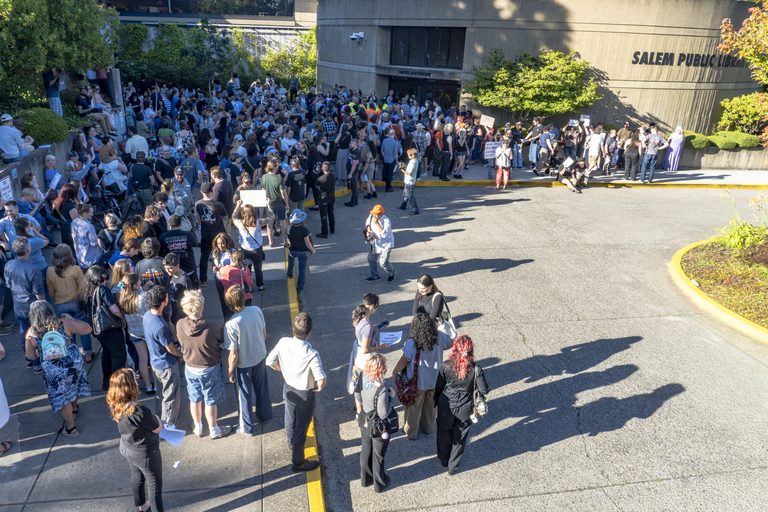
Salem’s City Council met virtually on Tuesday, Nov. 17, and voted 6‑2 to interpret the city’s zoning ordinance as excluding AI data centers that focus on large‑scale computation processing. The decision directly impacts Verrus, a Silicon Valley firm backed by Google, which has applied to build a roughly 130‑acre data‑center campus in the southeast part of the city.
Council vote and participants
Council President Linda Nishioka led the six councilors who voted in favor: Irvin Brown, Mai Vang, Vanessa Nordyke, Micki Varney, Paul Tigan and herself. Mayor Julie Hoy and Councilor Deanna Gwyn opposed the interpretation, while Councilor Shane Matthews was absent.
Background on the proposed project
Verrus submitted its application after a 120‑day moratorium on new data‑center projects expired in September. The company’s filing was deemed incomplete in August, and it has argued that the council’s new interpretation amounts to changing the rules after the fact. Verrus also noted that city staff had given the company the impression over several months that its proposal would be an acceptable land use under existing zoning.
Legal basis for the interpretation
City Attorney Dan Atchison told councilors that the council has the authority to interpret ambiguous language in the code. He said this was the first time the council had formally interpreted the ordinance and that the focus was on the phrase “data center facilities.” Because the term is ambiguous, Atchison argued, it must be evaluated by the council.
The interpretation hinges on excluding facilities whose primary purpose is “large‑scale computation processing,” which requires significantly more power, cooling and other resources than traditional data centers that existed when the code was written.
Rationale from councilors
Supporters said rapid advances in technology have outpaced the city’s 2014 code, which allowed data centers in certain zones regardless of scale. Councilor Varney questioned why the council had not addressed these ambiguities sooner, noting the proliferation of AI data centers across Oregon in recent years.
“This interpretation would have provided a really critical and essential direction at a time it was needed. But that didn’t happen. So here we are today,” Varney said.
Opposition and next steps
Mayor Hoy and Councilor Gwyn warned that the move could send the wrong message to the business community. Hoy said, “When you have a council that can reach back and change it (the code) is disconcerting. I was hoping we could make real changes before we do something like this.”
The council scheduled a public hearing for Monday, Nov. 23, to discuss a possible amendment to the city’s code that would more clearly address data‑center development. Atchison emphasized that the interpretation vote is a separate matter from any future code change.
He expressed confidence that the city’s stance would survive any appeal to the Land Use Board of Appeals, stating that a reversal is “highly unlikely.”
Implications for Salem
If the interpretation holds, Verrus’s AI data‑center project could be delayed or forced to redesign its facilities to meet traditional data‑center standards. The decision reflects a growing tension between local governments seeking to protect community resources and tech companies pursuing large‑scale infrastructure projects.
Residents who submitted written testimony for and against the interpretation will have another opportunity to weigh in at the Nov. 23 hearing, where the council will consider whether to amend the zoning language rather than rely on interpretive rulings.
Original reporting: Salem Reporter — read the source article.