Rockford, Ill. – On Tuesday night the city’s Zoning Board of Appeals convened a packed meeting to discuss a proposed text amendment that would establish a separate land‑use classification for data centers. The amendment aims to shift data centers from the generic “high‑technology use” category to a distinct regulatory framework that addresses community impacts.
City officials outline a performance‑based approach
City Administrator Todd Cagnoni opened the session by explaining the board’s intent. “We believe data centers should be regulated as a distinct land‑use category rather than being treated solely as high‑technology use under our zoning ordinance,” Cagnoni said. He added that the proposed framework would be performance‑based, allowing responsibly built facilities while protecting neighborhood properties, public infrastructure, water resources, public safety and the city’s long‑term economic interests.
Residents raise cost and safety concerns
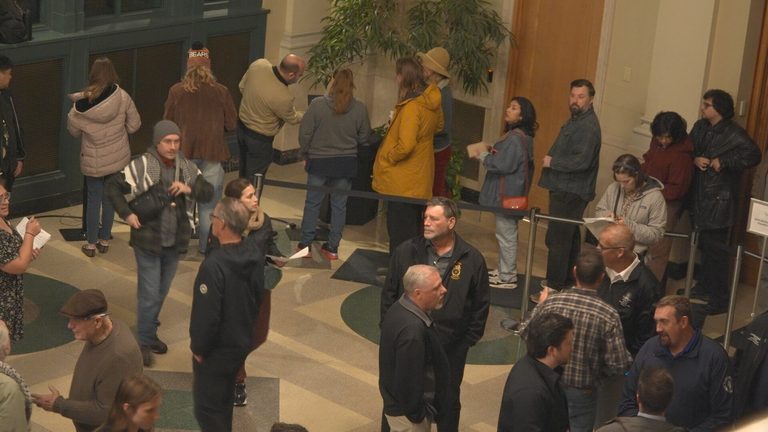
The council chambers and City Hall lobby quickly filled with more than 100 residents and dozens of speakers. Many expressed opposition, fearing that a data center could strain local services. “How much of this could be going to our school system? How much could be going to getting our firefighters paid?” asked meeting attendee Dylan Michael.
Other speakers highlighted environmental and quality‑of‑life issues. Victor Wehland summed up the sentiment: “I’m people, and as far as I know about people, people don’t like it.” Former congressional candidate Paul Nolley praised the proposed regulations as “common sense,” emphasizing the need for local leadership to address concerns about data centers and artificial intelligence.
Calls for accountability and community input
David Rutchik urged a merit‑based approach, stating, “I’m here to argue for a structure where a data center earns its place. We study the land.” Attendees repeatedly asked that developers be held accountable for any impacts on public services, infrastructure and the environment.
The meeting, which began at 6 p.m., is expected to continue into the night. If the Zoning Board votes to approve the amendment, the proposal will move to the city’s Codes and Regulations Committee for further review before reaching the full council for a final decision.
What’s at stake for Rockford?
Rockford’s leaders see the amendment as a way to balance economic development with community protection. Data centers can bring jobs and tax revenue, but the city wants to ensure that growth does not come at the expense of schools, emergency services or neighborhood character. By creating a distinct land‑use category, officials hope to set clear standards for construction, operation and mitigation measures.
Residents will have additional opportunities to comment as the amendment moves through the city’s legislative process. The board’s next steps include a vote on the text amendment, followed by committee review and a final council vote. The outcome will shape how, or if, future data center projects are permitted in Rockford.
Original reporting: WIFR Rockford News First (local) — read the source article.