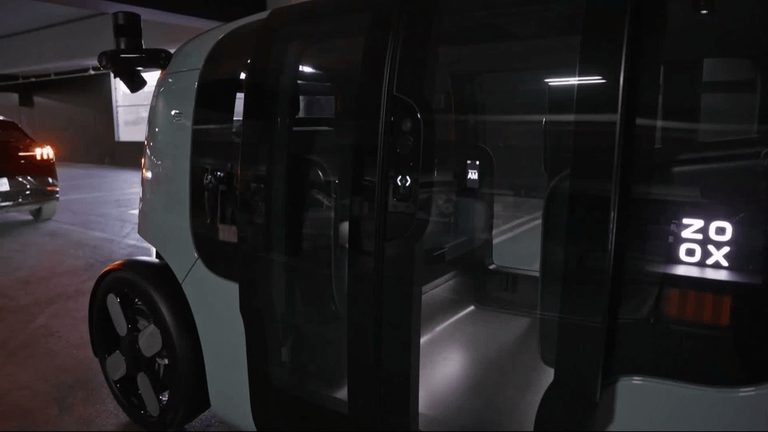
LAS VEGAS — State regulators have temporarily halted Waymo’s driverless taxis from using California freeways until the company can prove its vehicles can safely detect construction zones and emergency responders. The move comes as robotaxi services from Waymo, Vay and Zoox increase their presence in Southern Nevada.
Safety data and industry response
The California Department of Motor Vehicles said the restriction will stay in place until Waymo supplies evidence of reliable detection capabilities. Waymo responded that safety is “at the foundation of everything they do” and that it has voluntarily limited freeway operations across all markets to evaluate performance.
National Highway Traffic Safety Administration data released this month shows 172 crashes involving self‑driving or driver‑assisted vehicles nationwide over the past month. The count includes all automated vehicles, not just robotaxis.
Local drivers worry about instincts and livelihoods
Rideshare driver Michael‑Colin Reed argued that human instincts behind the wheel cannot be fully replaced by automation. “There is a certain amount of instinct that you cannot replace with a robot,” he said.
Automation expert Bryant Walker Smith warned that the bigger safety issue may still be human drivers. “We should be concerned about automated driving. We should be terrified about human driving,” he said.
Smith also called for greater transparency from companies, urging them to publicly share safety philosophies and performance data so the public can understand what challenges remain.
Job impact and community concerns
While automation firms claim they are creating new roles such as remote monitoring agents and vehicle service technicians, Reed noted a dip in his own ridership. “Ridership is definitely down a little bit,” he said, attributing the decline to rising rates, inflation and robotaxis taking market share.
Reed highlighted the broader economic ripple: “Every time you get in that robot car, there is a human being somewhere not paying for their kids’ ballet lessons or groceries or insurance that day.”
Gas prices, which spiked earlier this year, have begun to recede, adding another variable to drivers’ earnings beyond competition from autonomous fleets.
Looking ahead
Smith emphasized the need for continued data collection and public reporting to assess safety trends accurately. He said the industry should openly discuss unresolved problems and ongoing work to improve vehicle performance.
As Nevada residents watch the rollout of driverless rideshare services, the balance between technological advancement, safety assurance and protecting local jobs remains a central community conversation.
Original reporting: News 3 KSNV Las Vegas (local) — read the source article.