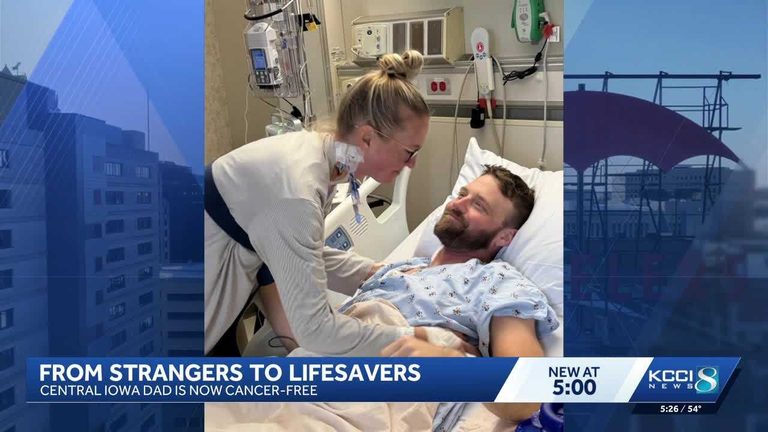
Polk City, Iowa – Kyler Hess, a 38‑year‑old father of two, received the news his family has been praying for: he is cancer‑free. After a diagnosis of stage 4 colon cancer that had metastasized to his liver, doctors told the Hess family that a living‑donor liver transplant offered the best chance for a cure.
Community donor steps forward
Abby Conley, a mother whose children attend the same school as the Hess kids, volunteered to donate half of her healthy liver despite not knowing the family personally. Conley’s self‑less act reflects the strong tradition of neighborly support that defines central Iowa communities.
Medical breakthrough at the Mayo Clinic
The transplant was performed at the Mayo Clinic, a leading medical center renowned for complex organ‑transplant procedures. Post‑operative scans conducted on Tuesday showed no evidence of cancer in Hess’s body. His wife, Melissa Hess, confirmed the results, saying, “He is cancer‑free.”
What a living‑donor transplant involves
In a living‑donor liver transplant, a portion of a healthy donor’s liver is surgically removed and implanted into the recipient. The donor’s liver regenerates to its full size within weeks, and the transplanted segment grows to meet the recipient’s needs. This procedure offers a shorter waiting time compared to deceased‑donor transplants and often leads to better outcomes for patients with advanced liver disease.
Impact on the family and community
For the Hess family, the transplant means a return to normal life after months of grueling treatment, hospital stays, and uncertainty. “We can finally focus on our kids and our future,” said Melissa Hess. The story has resonated throughout Polk County, prompting a surge of interest in organ‑donation education programs at local schools and churches.
How to become an organ donor
State health officials encourage residents to register as organ donors through the Iowa Department of Public Health. Living‑donor programs require thorough medical screening to ensure donor safety. Those interested can contact the Mayo Clinic’s transplant center or local hospitals for more information.
Looking ahead
Kyler Hess will continue regular follow‑up appointments to monitor his health and ensure the transplanted liver functions properly. The successful transplant underscores the importance of community solidarity, advanced medical care, and the life‑saving potential of organ donation.
For families facing similar battles, the Hess story offers hope and a reminder that compassionate neighbors can make a profound difference.
Original reporting: KCCI Des Moines — read the source article.