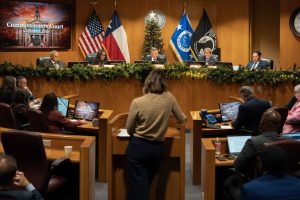
The Vancouver City Council met on Monday night and voted unanimously to adopt the city’s biennial budget for fiscal years 2027‑28. The operating and capital budget totals $2.3 billion, a modest 1.4 percent increase over the 2025‑26 plan and a balanced budget that eliminates the projected $30 million deficit.
Mayor and Council Praise the Process
Mayor Anne McEnerny‑Ogle praised the months of work that led to the vote, noting the countless meetings with community groups, staff and council members. “The council, with one voice, told the new acting City Manager, ‘Move forward with the work. Let’s keep the staff working forward, working hard,’” she said.
Chief Financial Officer Kathryn Shifley presented the final report after nine budget workshops over the past seven months, five of which were held since September. Councilors Ty Stober and Sarah Fox highlighted the transparency of the staff report and the public’s involvement, noting that residents submitted written testimony as well as appearing in person.
Key Funding Priorities
The budget allocates $1.6 billion for operations and $0.7 billion for capital projects. It will support more than 1,400 full‑time‑equivalent city employees, up 2 percent from the previous budget.
- Increased support for public defense services.
- Additional seasonal park staff to maintain park facilities.
- Continued design and construction of the Arts Hub.
- Construction of Fire Stations 3 and 6 and remodeling of Fire Station 8.
- Bridge Shelter operations and homeless outreach services.
- Development of Bagley Community Park.
- Small‑business support and regional economic‑development initiatives.
- Climate investments, including rooftop solar at Firstenburg Community Center.
- Accessibility improvements at city facilities and parks.
- Capital improvements to streets, parks, utilities and other infrastructure.
- Funding for 16 new police officers and related equipment, financed by the public‑safety sales tax.
- Construction of the Public Works Operations Center and PFAS filtration upgrades.
Revenue Measures
The budget is funded by a 1‑percent increase in property tax revenue, a blended 6‑percent rate adjustment for water, sewer, surface‑water and solid‑waste utilities, higher utility taxes on city‑provided services, increased fire‑inspection and operational‑permit fees, and expanded use of the business‑license surcharge.
Mayor McEnerny‑Ogle concluded, “After months of thoughtful work, we are positioned to advance our priorities while continuing to deliver the core municipal services our community relies on.” The budget takes effect on January 1, 2027, and supporting documents are available on the city’s website.
Original reporting: Clark County Today (Vancouver WA) — read the source article.