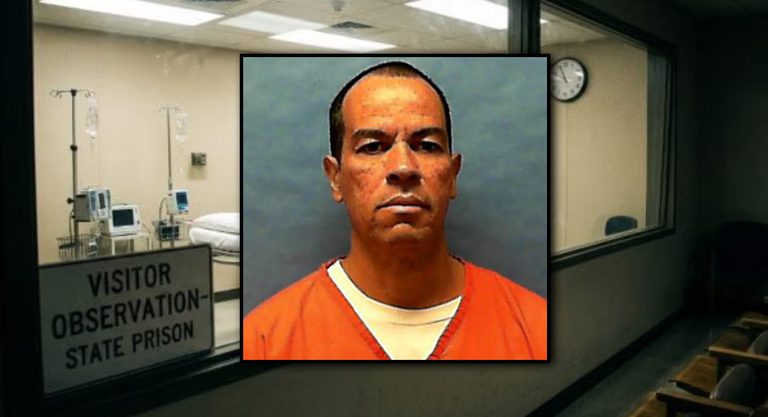
With just two weeks remaining before a scheduled lethal injection, Florida death‑row inmate Ricardo Gonzalez and his legal team have filed a petition with the Florida Supreme Court seeking to stay his Dec. 1 execution. The petition argues that a Miami‑Dade judge’s recent order blocked critical evidence that could prove Gonzalez is not mentally competent to be executed.
Background of the case
Gonzalez, 56, was convicted for the Jan. 3, 1992 robbery of the Kislak National Bank in North Miami that resulted in the death of off‑duty police officer Steven Bauer. He is slated for execution at 6:00 p.m. on Dec. 1, which would make him the 21st person put to death in Florida this year and the 40th since Jan. 2025.
In a 103‑page brief filed Monday, attorneys Jeffrey E. Feiler and Richard C. Klugh contend that Governor Ron DeSantis signed a death warrant on Oct. 30, giving the defense only nine days to investigate and present complex constitutional claims. The brief says the circuit court denied requests for cognitive testing, blocked transport for a defense psychologist, refused access to state execution logs, and withheld Gonzalez’s prison medical records from before 2021.
Questions of mental competency
The core of the appeal is whether Gonzalez can understand why he is being put to death. School records show he scored a 75 on an IQ test at age 12, and testing in the 1990s placed his full‑scale IQ at 80. A neurologist diagnosed him in 1998 with pugilistic encephalopathy—now known as chronic traumatic encephalopathy (CTE)—after an MRI revealed two fluid‑filled cavities in his brain, injuries stemming from severe childhood head trauma and a boxing career that began at age 13.
Because CTE is a progressive disease, Gonzalez’s lawyers argue his brain health has likely deteriorated further since the last scan more than 25 years ago. Klugh, a veteran Florida attorney, said in a sworn declaration that he has never represented an adult client with Gonzalez’s level of impairment, noting the inmate understands questions “only in part and only if explanation is given” step by step. Gonzalez reportedly needed about ten attempts to write down two mailing addresses during a recent phone call.
Legal standards and procedural concerns
The circuit judge dismissed Gonzalez’s intellectual‑disability claim as untimely and insufficient because his IQ scores were above the 70‑point threshold. Feiler and Klugh point out that the U.S. Supreme Court declared a strict 70‑point cutoff unconstitutional in Hall v. Florida (2014). They also note that state prosecutors told the Florida Supreme Court in 2005 that Gonzalez could not raise a competency challenge until a death warrant was signed—yet the lower court refused testing after the warrant was issued.
Allergy and medication risks
Beyond mental‑capacity concerns, the defense brief highlights five critical medication allergies listed in prison records, including two antihistamines and prednisone. In Jan. 2025, Gonzalez experienced hives, swollen lips, eyelids and throat tightness, telling staff he is “allergic to most medications.” An anesthesiologist hired by the defense warned that the state’s pre‑execution sedative belongs to a drug class to which Gonzalez is critically allergic, and that the steroid used to treat severe reactions is also on his allergy list.
The doctor explained that once the paralytic drug rocuronium is administered, Gonzalez “can’t move, speak, or signal” if he goes into anaphylactic shock, leaving a non‑medical prison warden to perform a consciousness check on a man whose brain damage already obscures physical responses.
Procedural integrity and past irregularities
The circuit judge dismissed the allergy concerns as speculative, assuming the Florida Department of Corrections follows its written execution protocols. Gonzalez’s attorneys counter that the state has forfeited that trust, citing a recent federal court record from the Nov. 5 execution of Jesse Guardado, where prison staff allegedly used correction fluid to alter an expired date on an execution‑drug log.
Jury vote and sentencing history
The brief also notes that neither of the two juries that sentenced Gonzalez to death voted unanimously. The first jury split 7‑5, and the 1998 resentencing jury voted 8‑4 after being told its recommendation was advisory. Florida remains the only state that permits a death sentence based on an 8‑4 jury vote.
Requested relief
Gonzalez’s lawyers are asking the Florida Supreme Court to halt the Dec. 1 execution, order the release of the withheld medical and execution records, allow independent specialists in neurology, neuropsychology and immunology to examine him, and send the case back for a full evidentiary hearing.
Original reporting: Tampa Free Press — read the source article.