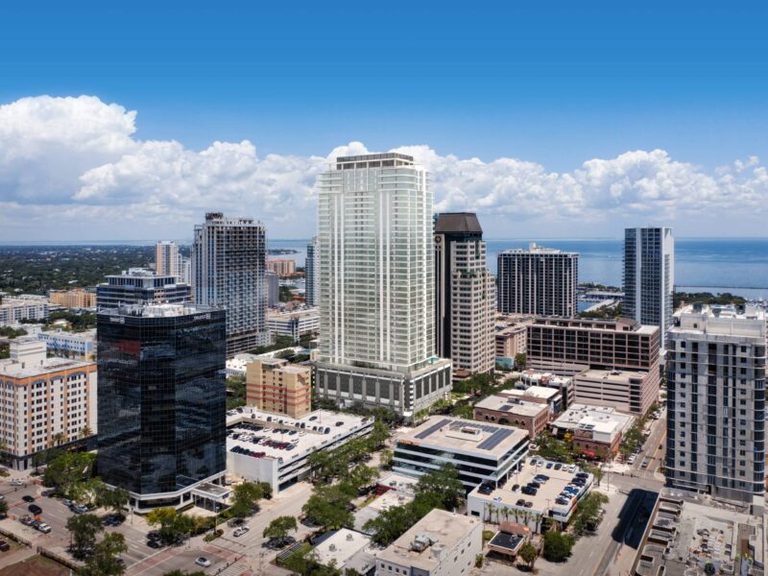
St. Petersburg faces a projected $33 million shortfall in property‑tax revenue for fiscal year 2028 after the passage of Amendment 3, which grants tax exemptions on many properties. City leaders argue that continued downtown development can help close the gap without overwhelming existing infrastructure.
Sewer capacity is far from maxed out
Claude Tankersley, the city’s public‑works administrator, told the St. Pete Catalyst podcast on Sept. 29 that downtown sewer lines are operating at less than half of their capacity. This means the city can support many more toilets – and therefore many more residential units – without needing extensive new sewer lines.
Impact fees and workforce‑housing contributions
Developers already pay impact fees that fund additional municipal services such as roads, police, fire protection and sewer upgrades. Mack Feldman of Feldman Equities noted that these fees are designed to offset the incremental strain that growth places on city services, ensuring existing taxpayers are not left footing the entire bill.
Beyond impact fees, the city requires developers of larger projects to contribute to a workforce‑housing fund. For example, the upcoming Waldorf Astoria residential tower, slated for completion in 2030, will write a $4 million check to that fund, providing affordable housing options while generating future property‑tax revenue.
Development drives assessed‑value growth
According to analysis by the Urban Land Institute, 68 % of the increase in assessed property values in St. Pete comes from new development, even though such parcels represent only 2 % of the city’s land. New parcels average an assessed‑value boost of about $4 million each, compared with roughly $130,000 for existing parcels – a more than 30‑fold difference.
The trend mirrors nearby Tampa, where new development accounts for roughly 7 % of parcels but contributes 52 % of assessed‑value growth.
How many projects are needed?
Downtown Partnership CEO Jason Mathis estimates that a typical market‑rate apartment building, like the 3rd and 3rd project, can generate about $3 million in annual property‑tax revenue. To replace the projected 2028 loss, the city would need the equivalent of 11 such developments.
While each new building may require additional fire, police, road and storm‑water services, many of those costs are covered by impact fees, utility charges and developer contributions. Moreover, higher‑density projects place many households on a single parcel, reducing the need for extra roads and pipes compared with low‑density sprawl.
Storm‑water remains a separate concern
Unlike wastewater, storm‑water runoff must be managed as rain falls, moving through streets, drains and waterways. Development can increase runoff, but the effect depends on what previously occupied the land. In already‑built downtown areas, the impact is less pronounced than on undeveloped sites.
Aging drainage systems, low‑lying neighborhoods and heavy rains create storm‑water challenges regardless of new construction, underscoring the need for continued investment in drainage infrastructure.
Bottom line
St. Petersburg’s existing sewer capacity and the city’s impact‑fee structure position it to welcome further downtown development while mitigating fiscal losses from Amendment 3. By leveraging higher‑density housing, impact fees, and workforce‑housing contributions, the city can bolster its tax base without overburdening its core utilities.
Original reporting: St. Pete Catalyst — read the source article.