By: James Matlock
Ground beef is up roughly 70 percent in six years. Families across Texas are paying more at the grocery store while four giant packers still control about 85 percent of the processing. Texas has roughly 67 USDA-inspected cattle slaughter plants. Many of the small ones run about 10 head a day. One big Panhandle operation can move thousands. The small butchers face nearly the same federal red tape, HACCP plans, inspection rules, and paperwork as the giants. That is not food safety. That is protection for the monopolies.
President Trump signed an executive order in September 2026 to promote fair competition in livestock markets and expand market access so American ranchers can butcher, process, package, and sell their meat across state lines while keeping high food safety standards. The order directs the USDA to streamline the State Meat and Poultry Inspection Program, the Cooperative Interstate Shipment Program, and related options, cut unnecessary burdens, and support small processors. It is a direct step against the “nasty monopoly” of the big processors.
This fight is not new. The issue of local production has been before the Supreme Court twice. In the 1940s, Wickard v. Filburn held that a farmer growing wheat for his own use on his own farm could still be regulated under the Commerce Clause because the aggregate of such local activity affected interstate and international commerce. In 2005, Gonzales v. Raich applied the same logic to homegrown medical marijuana. Both times the Court rejected purely local production by citing the broad reach of commerce—interstate and foreign. The Court decided that what happens entirely inside one state, for one family’s use or local sale, can still be treated as a matter of national or international markets.
The Constitution grants Congress the power to tax interstate and international commerce. That is the only taxing power of that kind the federal government was given. When production and sales stay inside a state—true intrastate commerce—the federal government collects less of that revenue. Every local beef sale that never leaves Texas, every side of beef that never crosses a state line into the hands of a national packer, is revenue the federal government does not get. That is not a bug. That is the design.
This is why I ran for Texas Railroad Commission—to create more local revenue and cut the federal budget. With technology advancements, we can process oil and gas at the field level, eliminating a lot of the federal funding that flows to centralized infrastructure and the bureaucracy that comes with it. The same principle applies to beef. Keep the production and the value local, and you starve the federal treasury of money it was never constitutionally entitled to collect from purely in-state activity.
To rein in federal spending, the states must exercise the authority they never fully surrendered. They must reclaim control over purely local production and sales. Bring back the local plants, the local butchers, and the local markets. The more Texas ranchers process and sell their own cattle inside Texas, the less the federal government can skim through the channels it has stretched the Commerce Clause to control. Wall Street hedges and international price discovery do not put steaks on Texas tables. Local production does.
Frankly, I do not give a damn about “international commerce,” Wall Street’s ability to hedge cattle futures for higher margins, or the political landscape that protects the Big Four. Ranchers raise the cattle. Families buy the beef. Small Texas plants and custom processors already exist and already know how to produce safe, local product. The same rules that make sense for a plant running thousands of head a day do not make sense for a plant running ten. Those rules raise costs, limit competition, keep prices higher at the store, and feed the federal treasury at the expense of the states and the people who live in them.
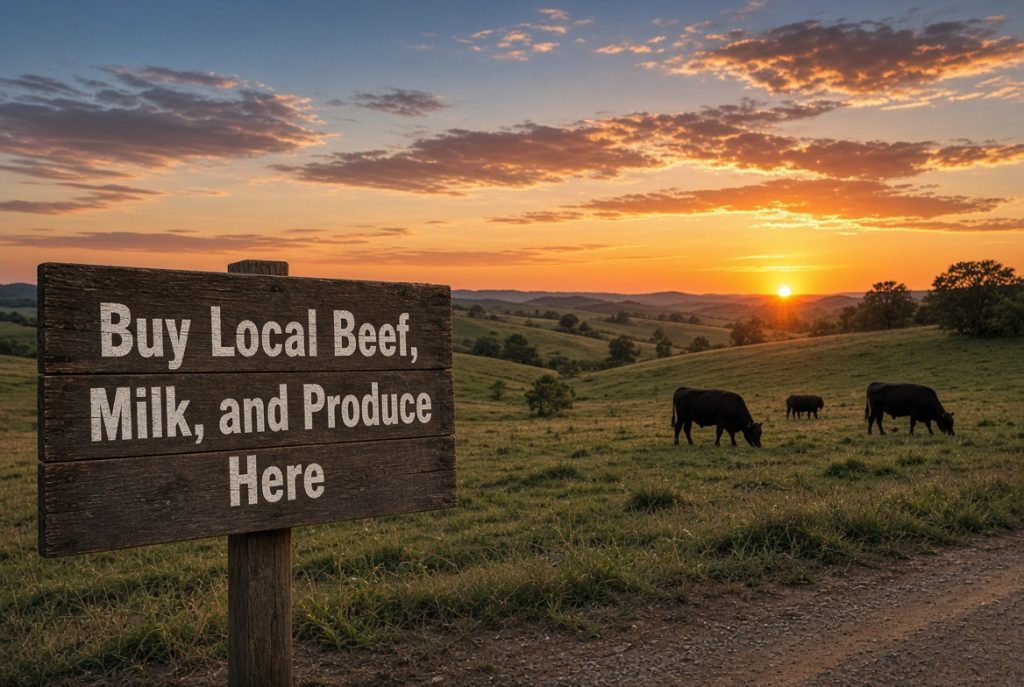
More local beef means more competition, more options for ranchers, lower prices for families, and a smaller federal take from commerce that never left the state. Texas has the cattle, the land, the small plants, and the demand. The executive order opens the door. The Supreme Court has already shown it will stretch the Commerce Clause to cover local production. Now is the time for the states to push back, cut the red tape that treats a 10-head plant like a 6,000-head packer, let ranchers sell what they raise inside their own borders, and force the federal government to live within the revenue the Constitution actually authorizes.