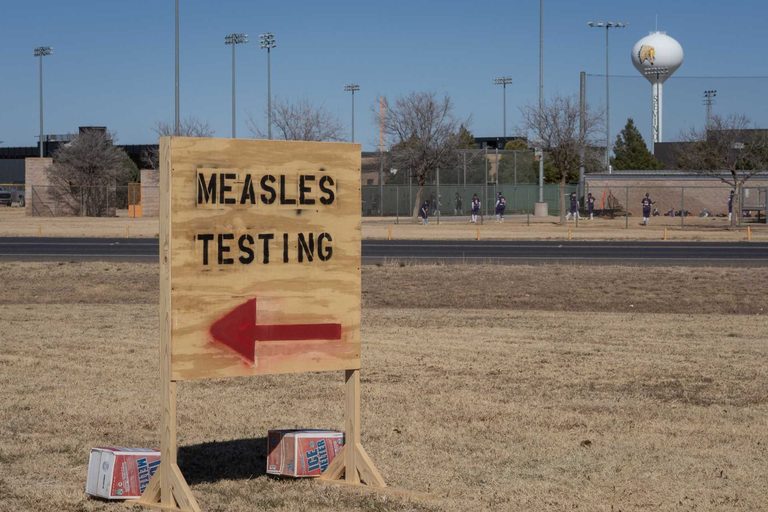
The Pan American Health Organization declared on Tuesday that the United States and Mexico have lost their measles‑elimination status. After more than three decades of near‑zero transmission, the highly contagious virus is now spreading at the highest rate in over 30 years.
National outbreak details
Measles has been circulating throughout the Americas since 2024. In the United States, all but three states have reported at least one confirmed case this year. The CDC estimates more than 5,400 cases so far, already double the tally from 2025, with the largest outbreak centered in Pennsylvania.
Major state outbreaks include:
- Texas – over 760 infections and two child deaths
- New Mexico – about 100 cases and one adult death
- South Carolina – nearly 1,000 cases, the fastest‑growing outbreak in decades
- Pennsylvania – a surge that has pushed the national total past 5,000
Since 2025, thousands of Americans have been sickened, a stark contrast to the pre‑2000 era when the nation typically logged fewer than 200 cases a year, most tied to international travel.
Why vaccination matters
Public‑health officials say a community vaccination rate of 95% is needed to prevent measles outbreaks. Falling vaccination rates, especially in close‑knit communities with low immunization coverage, have created pockets of susceptibility. Dr. Susan Kansagra, chief medical officer of the Association of State and Territorial Health Officials, warned that measles can serve as a “canary in the coal mine” for other vaccine‑preventable diseases.
The disease is especially dangerous for young children and adults over age 30, causing complications such as blindness and brain swelling. This year, ten measles‑related deaths have been reported in the United States, at least five of them children.
Federal response
In August and September, the Centers for Disease Control and Prevention awarded $100 million in two tranches to support state and local measles‑response efforts. Health Secretary Robert F. Kennedy Jr., a former anti‑vaccine advocate appointed by President Trump, and CDC Director Dr. Erica Schwartz have reiterated that vaccination remains the best defense.
However, some public‑health leaders argue the federal response has been insufficient. Chrissie Juliano, executive director of the Big Cities Health Coalition, said the funding “wasn’t a lot of money, frankly,” while University of North Carolina professor Noel Brewer criticized the lack of a louder federal voice and a more aggressive vaccination push.
Looking ahead
The Americas were declared measles‑free in 2016 after successful vaccination campaigns that prevented an estimated 6.2 million deaths between 2000 and 2023. Regaining elimination status will require a concerted effort to raise immunization rates, especially in communities where vaccine hesitancy has taken hold.
Experts note that other countries in the region, including Brazil and the United Kingdom, have lost and later regained measles‑elimination status, suggesting that recovery is possible with sustained public‑health action.
Original reporting: 40/29 / KHBS (NW Arkansas) — read the source article.