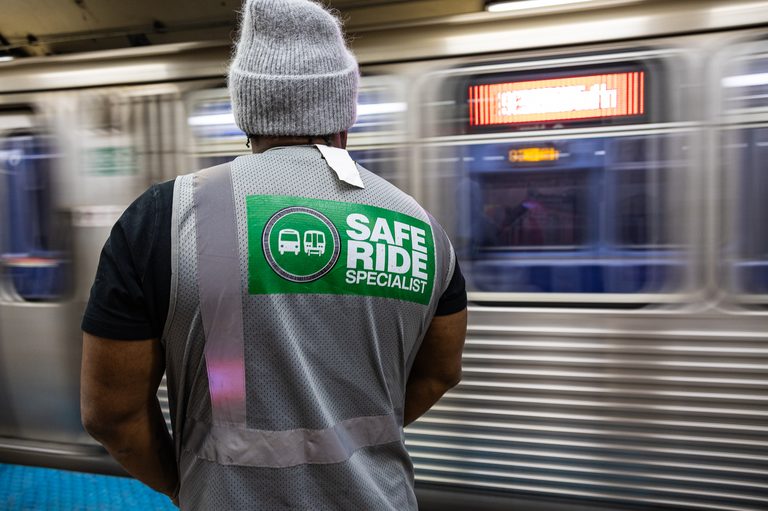
Chicago – The Chicago Transit Authority (CTA) rolled out a new Safe Ride Specialist pilot this October, deploying trained volunteers from four community partners on the Red, Blue and Green lines. Wearing gray vests with green and purple patches, the specialists are stationed on platforms and inside train cars to assist riders experiencing mental‑health crises, substance‑use emergencies, or other conflicts before they escalate.
How the program works
Specialists come from Healthcare Alternative Systems, Street Samaritans, Housing Forward and Metropolitan Peace Initiatives. Each participant brings experience in mental‑health care, homelessness outreach or violence prevention. Before joining the CTA, they complete up to three weeks of training covering de‑escalation techniques, Mental Health First Aid, CPR and Narcan administration.
Two roles are defined:
- Crisis Intervention Specialists focus on riders in mental‑health or substance‑use crises, connecting them with treatment resources. Teams of two to three work each shift.
- Community Violence Intervention Specialists engage youth and young adults, building relationships to prevent conflicts from turning violent. About 20 specialists cover two shifts along the Red Line.
Riders can approach the specialists directly, or request help from CTA staff, security officers, call boxes, or the intercom button inside train cars. In emergencies, 911 remains the appropriate number.
Community response
Many riders and local leaders have welcomed the initiative as a long‑overdue step toward a safer, more welcoming transit system. Longtime Red Line rider Colea Hull, who commutes at night, said, “I used to like the train. Now, I don’t… They need a safe haven, because being on the train is not safe for them.” Hull added that the pilot is “only a start,” but expressed hope that specialists will connect vulnerable passengers with needed support.
Alderman Andre Vasquez (40th Ward), co‑chair of the City Council’s Committee on Transportation, echoed riders’ concerns, noting that current security measures “are not doing enough.” He said the increased presence of specialists should help, though effectiveness will need time to assess.
Funding and broader safety efforts
The pilot costs $9.6 million, funded through existing CTA allocations and additional money authorized by the Regional Transportation Authority Board after the passage of the Northern Illinois Transit Authority Act. The program follows recent CTA actions supported by the Trump administration, which urged the agency to increase monthly policing hours by 75 percent, double the number of off‑duty Chicago police officers on trains, and add 4,400 monthly policing hours from Cook County sheriff’s officers.
These efforts appear to be bearing fruit: reported crime across the CTA system is down 30 percent so far this year compared with the same period in 2025, according to Block Club’s earlier reporting. Nevertheless, isolated violent incidents continue, such as the fatal stabbing of a CTA janitor at the Damen Green Line station in October.
Rider perspectives
Longtime rider Antonio McCray, who travels the Purple and Red lines, believes the specialists can “add a whole lot” by intervening before conflicts turn violent. He has noticed fewer arguments on the Red Line since the increased sheriff patrols began earlier this year.
Conversely, some riders, like Malik Voyard, who uses the Red and Green lines for work and school, voiced concerns about police interactions that sometimes heighten tension. Voyard suggested that officers carrying firearms should receive training comparable to that of Safe Ride Specialists to ensure consistent, compassionate responses to mental‑health crises.
Looking ahead
The CTA plans to evaluate the pilot’s impact over the coming months, tracking reports of safety incidents and overall rider satisfaction. If successful, the agency may consider expanding the program to additional lines and stations, further reinforcing Chicago’s commitment to a safe, welcoming public‑transit system for all families and communities.
Original reporting: Block Club Chicago — read the source article.