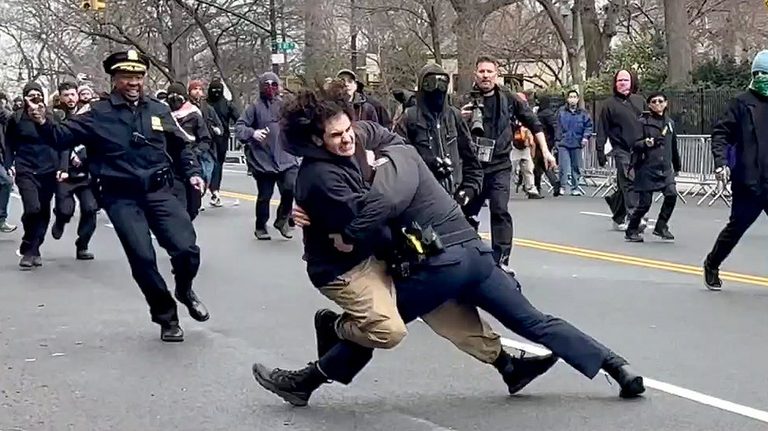
New York City Mayor Zohran Mamdani announced on Monday that the NYPD’s Strategic Response Group (SRG) will be dissolved. The decision follows the mayor’s campaign promise to reshape how the city handles large demonstrations and public‑safety incidents.
New civilian‑led model for protests
“New Yorkers exercising their constitutional right to protest should not be met with the same police response as a terrorism threat,” Mamdani said at a news briefing. He outlined a three‑part plan that will roll out by spring 2027.
The first component is the Community Dialogue and De‑escalation Division (CDDD), an unarmed civilian team that will focus on outreach, communication and conflict resolution. The CDDD will not have arrest authority but will work alongside a newly created First Amendment Support Team (FAST), a 30‑officer unit trained specifically in dialogue and de‑escalation techniques.
Finally, a Patrol Support Division will be formed. Officers in this division will retain crowd‑control training but will spend the majority of their time on routine patrol duties. Counter‑terrorism responsibilities will be consolidated under the NYPD’s Intelligence and Counterterrorism Bureau.
Why the SRG is being retired
The SRG was originally created as a highly mobile, well‑trained tactical unit, similar to a senior SWAT team, to respond quickly to large crowds, major events and potential terrorist threats. While the unit provided a deterrent presence at events such as the Macy’s Thanksgiving Day Parade and the New Year’s ball drop, critics argue that its deployment at protests has sometimes escalated tensions.
Retired FBI supervisory special agent James Gagliano, a Fox News contributor, praised the SRG’s rapid response capabilities but warned that removing its uniformed presence could embolden criminals, anarchists and terrorists. “Part of that was being on the front lines, the deterrent effect, and I think that’s something we’re losing as well,” Gagliano said.
Support and criticism from law‑enforcement leaders
Vincent J. Vallelong, president of the NYPD Sergeants Benevolent Association, expressed concern that unarmed civilians would be unable to stop a determined attacker. “Unarmed civilians cannot talk a determined attacker out of detonating a bomb,” he said, fearing the new approach could invite violent agitators to infiltrate peaceful demonstrations.
NYC Police Commissioner Jessica Tisch responded that the restructuring will not diminish the department’s ability to protect New Yorkers or leave officers without the resources needed to confront serious threats.
Recent incidents highlight the stakes
The SRG was involved in several high‑profile incidents last year, including the response to a mass shooting at a Manhattan office building that houses the NFL’s headquarters and the investigation of an attempted bomb attack outside the mayor’s residence. Two alleged ISIS‑inspired attackers were arrested after their improvised explosive devices failed to detonate.
Mayor Mamdani emphasized that upcoming events such as the 100th Macy’s Thanksgiving Day Parade and the New Year’s ball drop will proceed as planned, with the new units taking effect in the spring of 2027.
What this means for New Yorkers
The shift to a civilian‑led, dialogue‑focused model reflects a broader national conversation about balancing public safety with First Amendment rights. By reducing reliance on heavily armed tactical units for protest management, the city aims to foster a safer environment for peaceful demonstrators while retaining the capacity to respond swiftly to genuine threats.
Community leaders and faith‑based organizations have welcomed the emphasis on dialogue, noting that it aligns with traditional values of peaceful resolution and respect for constitutional freedoms.
Original reporting: Fox News (HLL/CB) — read the source article.