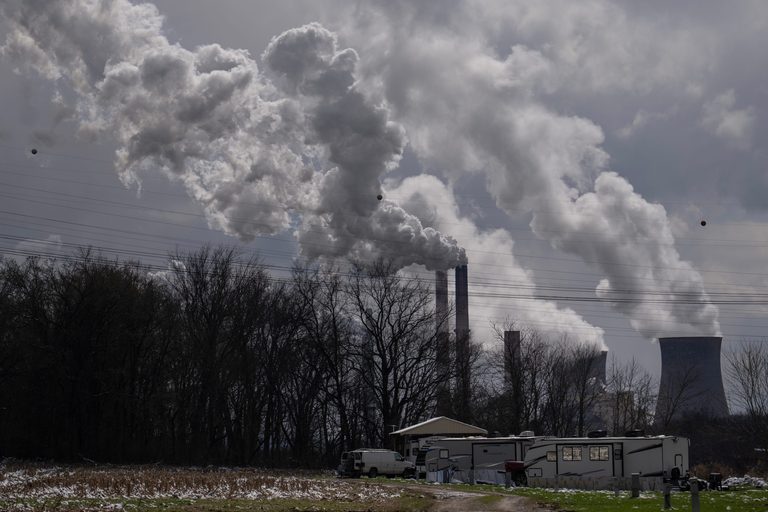
Jefferson County residents may see the Cardinal coal‑fire power plant stay open beyond its scheduled 2028 shutdown, as House Republicans prepare a bill to block any closure that stems solely from a prior settlement. The proposal, still in draft form, would bar the state from ending operations of coal or other power plants simply because of a private agreement.
Why lawmakers support the measure
Republican leaders argue that preserving the plant safeguards the reliability and affordability of Ohio’s electric grid. With the regional grid operator PJM already reporting tight generation supplies, keeping the plant online could help curb future spikes in electricity rates—a top concern for Ohio families.
Rep. Adam Holmes, chair of the House Energy Committee, said Buckeye Power, the plant’s co‑owner, wants to sell power from Unit 3 into a special auction that backs up the system during periods of unusually high demand. He emphasized that the legislation is meant to spark a public discussion, not a “sneaky, lame‑duck” maneuver, and that Ohio lawmakers will hear testimony from stakeholders such as Buckeye Power, the Ohio Farm Bureau, PUCO and PJM.
Background on the settlement
In 2015, American Electric Power (AEP) reached a settlement with the Public Utilities Commission of Ohio (PUCO) that included a commitment to shut down the plant’s third unit by Dec. 31, 2028. The Sierra Club signed onto the settlement, and Buckeye Power purchased full ownership of the unit in 2022.
Buckeye Power spokeswoman Shelby Moore noted that the settlement was reached when the region’s reliability outlook was very different. She said the proposed bill would preserve access to electricity when it’s needed most, especially as data centers and heavy manufacturing increase demand.
Environmental and legal objections
Environmental groups warn that overturning the settlement could undermine the careful negotiations that keep electric rates down. Sierra Club’s Neil Waggoner argued the move may violate the Ohio Constitution’s prohibition on retroactive laws that impair public contracts. The Ohio Environmental Council’s Nolan Ruschilling called the effort “unconstitutional” and a rushed response to a foreseeable event.
Legal experts also cautioned that allowing lawmakers to disregard settled agreements could destabilize future PUCO settlements, making it harder to achieve regulatory certainty for consumers.
Economic implications
Energy economists note that retiring 20th‑century coal plants while demand from data centers soars could push electricity prices higher and increase the risk of blackouts. Keeping Unit 3 online, even temporarily, may help limit cost increases for Ohio households, a concern echoed by many voters.
However, coal‑fire generation remains far dirtier than natural gas, solar, wind or nuclear power in terms of carbon dioxide and heavy‑metal emissions. Critics argue that extending the plant’s life runs counter to Ohio’s broader environmental goals.
Legislative timeline
The Ohio General Assembly’s session ends Dec. 31, after which Democrats will assume the governor’s office. Republicans currently hold near‑total control of the statehouse, but they have lost enough seats to override potential gubernatorial vetoes. Lawmakers hope to act before the session closes to ensure the bill can pass while they retain legislative dominance.
A powerful House lawmaker confirmed that testimony from stakeholders will be heard this week, though the bill has not yet been assigned a number.
What’s next?
Stakeholders, including PUCO senior vice president of operations Michael Bryson and federal energy advocate Sarah Jarrett, have urged Buckeye Power to seek temporary EPA approval or a voluntary waiver to keep the plant operating for at least six more years.
The outcome will shape Ohio’s energy landscape, balancing the desire for affordable power with the state’s long‑term environmental objectives.
Original reporting: Signal Akron — read the source article.