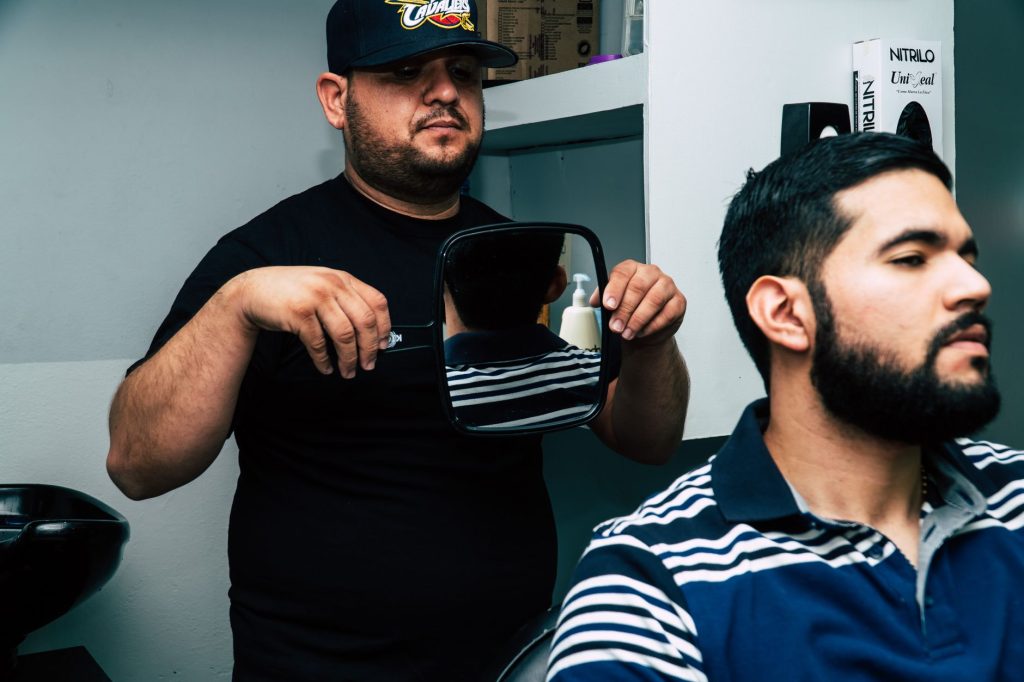
Reyes Barber Shop sits on Garland Road the way a lot of things in this part of town sit — without ceremony, without signage that shouts, without any particular effort to get noticed. Rudy Reyes has been cutting hair here since the mid-1990s, and the shop wears that history the way an old leather chair does: comfortably, without apology.
Rudy came up in Garland, grew up watching his uncle work a pair of clippers on the east side, and learned the trade the way most barbers of his generation did — by watching, then doing. He opened his own shop in his early thirties and hasn’t moved since. The address hasn’t changed. Neither has much else. The chairs are the kind with hydraulic pumps and chrome footrests. There’s a row of product bottles on a shelf that includes at least one brand no longer manufactured anywhere. The television is usually on, usually tuned to something Rudy doesn’t pay attention to because he’s talking, and the talking is the point.
On a weekday morning, the shop fills up slowly. A retired schoolteacher named Guillermo comes in around nine, same as always. A young guy in his twenties who works at the warehouse off Miller Road drops in before his shift. Rudy moves between them without hurrying, the clippers making that particular low hum that fills a barbershop like background music. He asks about Guillermo’s daughter’s soccer tournament. He asks the warehouse kid if he got that car thing sorted out. He remembers everything.
That’s the thing people mean when they say Rudy’s shop is different from the franchises and the walk-in chains that have opened up around Garland over the past decade. It’s not that the haircuts are dramatically better — though they’re solid, clean, and priced around fifteen to eighteen dollars depending on what you’re getting. It’s that Rudy has absorbed the particulars of a few hundred lives over thirty years and carries them around with him. Regulars say they don’t go for the cut. They go because Rudy will ask about whatever they mentioned last time.
He does fades, tapers, straight razor work around the edges. He still does old-school flat tops if you want one, though he’ll tell you honestly whether you’ve got the head shape for it. Walk-ins are fine most days, but Tuesday mornings and Saturday afternoons fill up. Cash is preferred but not required.
The neighborhood around the shop has changed considerably since Rudy planted himself here. Restaurants have come and gone. A stretch of retail two blocks east got torn down and rebuilt twice. Rudy watched all of it from behind his chair, through the front window, through the conversations of the men who came in and told him what was happening. He is, in a real sense, a kind of archive — not of the official version of Garland, but of the lived one.
His hours are loose by modern standards: roughly nine to six, Tuesday through Saturday, closed Sunday and Monday. He doesn’t take appointments, mostly because he never needed to. The regulars know when to come. New people figure it out. That system has worked for thirty years, and Rudy doesn’t see a reason to change it now.