The Chaffee Crossing Historic Barbershop sits inside the old cantonment district on the former Camp Chaffee grounds, and it is one of the few remaining buildings in the country where you can walk into a World War II-era military barbershop and find it largely as it was. That’s not a sales pitch. It’s just a fact that takes a minute to settle in once you’re standing there.
Getting to it requires a short drive through the Chaffee Crossing development — past new housing tracts and a commercial strip that feels like any other edge-of-city sprawl — which makes the moment the historic district opens up around you genuinely disorienting. The streets go quiet. The buildings drop to one story. The scale shifts. The barbershop is in a low brick structure that could pass for a maintenance shed if you weren’t looking for it.
Inside, the barber chairs are original — heavy, chrome-armed, the kind that don’t fold for transport and don’t apologize for taking up space. The mirrors are original. The shelving still holds period equipment. Someone with a decent eye for preservation made sure this didn’t get gutted and turned into an interpretive display about gutted buildings. The room actually reads as a room people used.
What they did here, thousands of times a day during the peak war years, was cut the hair of men about to ship out. Elvis Presley famously got his induction haircut at Camp Chaffee in 1958, though the barbershop is careful not to make the whole visit about that one celebrity anecdote. It’s worth knowing, but it’s the least interesting thing about the place once you’ve been inside for ten minutes.
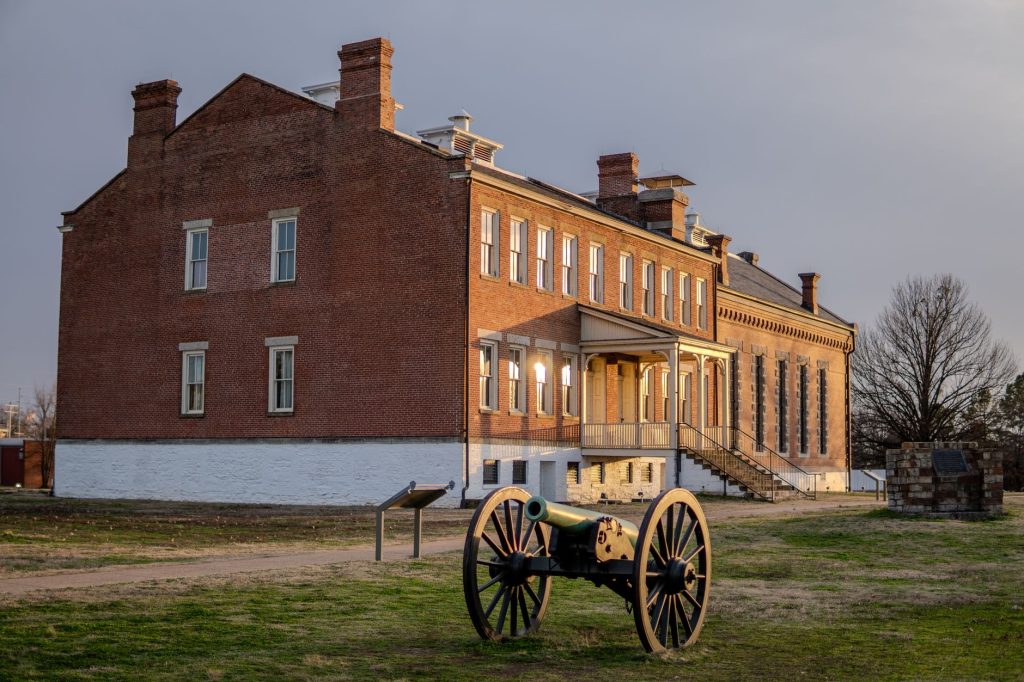
The broader Chaffee Crossing historic district has several other preserved structures worth walking, including the brick barracks and the old fire station, but the barbershop is the one with the most concentrated sense of what daily life looked like on a mid-century Army post. There’s something about the mundaneness of a haircut — the absolute ordinariness of it — that makes the history feel less abstract than a parade ground or an administrative building ever could.
Admission to explore the historic district is free, and the barbershop is generally accessible during daylight hours, though hours for the interior can vary depending on staffing and events. It’s worth calling ahead or checking with the Chaffee Crossing organization before making a special trip, particularly if you want someone on-site to open up the building and answer questions. The staff, when present, tend to know their material without overselling it.
Plan for an hour if you’re doing the full historic district walk. The barbershop itself takes maybe fifteen minutes, but it’s the kind of place where you find yourself standing still longer than you expected, running a hand along a chair arm and doing the math on how many people sat in it before the planes left. Fort Smith has no shortage of Civil War and frontier-era history competing for attention. This is the quieter, more recent past, and it rewards the people who bother to show up for it.