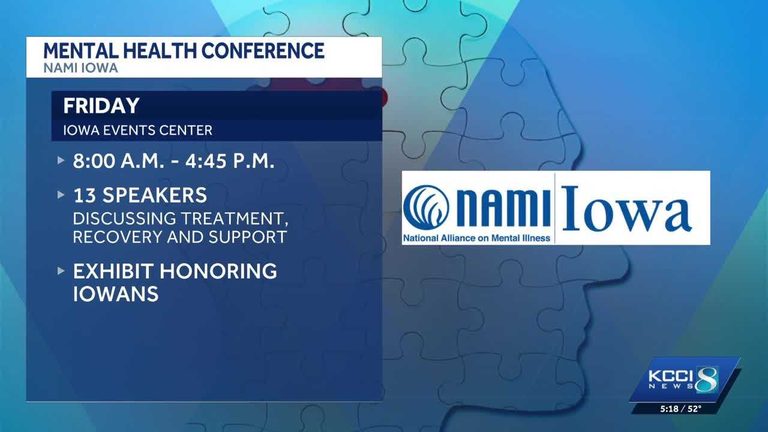
Des Moines, Iowa — On Friday, the Iowa Events Center became a hub for mental‑health professionals, advocates and families as the state hosted the NAMI Iowa 2026 Mental Health Conference. The full‑day event ran from 8 a.m. to 4:45 p.m., offering a focused look at how Iowa can improve treatment, foster recovery and expand support networks for those struggling with mental‑health challenges.
Key speakers address treatment pathways
The conference featured 13 speakers representing a range of expertise, from clinical psychologists to community‑based program directors. Presentations covered evidence‑based treatment models, the importance of early intervention, and strategies for integrating mental‑health services into primary‑care settings. Attendees heard practical guidance on expanding access to therapy, medication management and crisis‑response resources, all aimed at reducing barriers that many Iowans face.
Recovery stories and support resources
Beyond clinical topics, the agenda emphasized recovery as a lifelong journey. Panels highlighted personal testimonies from individuals who have navigated the mental‑health system, illustrating how peer support, family involvement and faith‑based initiatives can reinforce lasting change. Resources for families, including educational workshops and counseling referrals, were made available to help loved ones become effective allies in the recovery process.
Honoring lives lost to drug addiction
An exhibit within the conference space paid tribute to Iowans whose lives were cut short by drug addiction. Photographs, personal mementos and community messages created a solemn reminder of the human cost of the opioid crisis and underscored the urgency of comprehensive prevention and treatment efforts.
Community and faith partnerships
Representatives from local churches, faith‑based nonprofits and community groups highlighted collaborative projects that blend spiritual support with professional care. These partnerships aim to reach underserved populations, particularly in rural areas where mental‑health resources are scarce. By aligning faith‑centered outreach with clinical expertise, the presenters argued that Iowa can build a more compassionate and effective support network.
Looking ahead
Conference organizers concluded with a call to action for policymakers, health‑care providers and community leaders. They urged the state legislature to consider funding increases for mental‑health services, expand tele‑health options, and support workforce development to address the shortage of qualified clinicians. The hope expressed by the speakers was clear: with coordinated effort, Iowa can set a national example for how to treat mental illness, promote recovery and sustain supportive environments for all citizens.
For those unable to attend, recordings of the keynote sessions and supplemental materials will be posted on the NAMI Iowa website in the coming weeks.
Original reporting: KCCI Des Moines — read the source article.