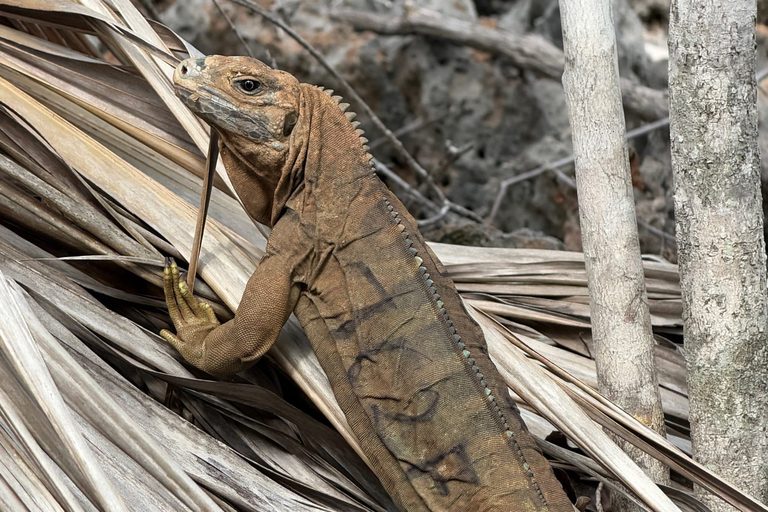
Fort Worth, Texas – On Saturday, Nov. 14, the Fort Worth Zoo and a coalition of Jamaican and international partners marked a milestone in wildlife conservation by releasing the 1,000th Jamaican rock iguana back into its native habitat in the Hellshire Hills of Jamaica.
Local dedication, global impact
Thirty‑three iguanas were set free after a two‑hour trek on foot through rugged terrain, a journey made possible by the Jamaica Defence Force Coast Guard, which provided transportation for the release team. Nearly 30 representatives from partner organizations, including the National Environment and Planning Agency, Hope Zoo, the Caribbean Coastal Area Management Foundation, the Urban Development Corporation, the Institute of Jamaica and the University of the West Indies, Mona, took part in the effort.
“When I joined the Fort Worth Zoo and this program in 2016, we had just reached 300 iguanas reintroduced into the wild,” said Dr. Stesha Pasachnik, the zoo’s conservation biologist leading the project. “In the last 10 years, we have been able to improve field efforts and grow the head‑start program to reach this historic milestone.”
Why the iguana matters
The Jamaican rock iguana, once thought extinct, is a keystone species in the island’s tropical dry forest. By eating fruit and dispersing seeds, the iguanas help regenerate the forest, supporting nearly 400 plant species and 18 animal species, seven of which are endemic to the Hellshire Hills.
Young iguanas face threats from introduced predators such as mongooses, cats and dogs, as well as habitat loss. To improve survival rates, the Jamaican Iguana Recovery Program uses a head‑starting technique: hatchlings are raised at the Headstart Facility at Hope Zoo in Kingston until they are large enough to better defend themselves against predators before being released.
Signs of progress
Researchers report encouraging trends: more females are nesting, protected nest sites are increasing, and the number of hatchlings emerging each year continues to grow. Observations also show natural recruitment into the wild population and longer‑distance dispersal, suggesting the species is moving toward a self‑sustaining status.
“Each iguana serves as an encouraging reminder of what long‑term, collaborative conservation can accomplish,” Pasachnik added.
Community involvement
The Fort Worth Zoo has been a partner in the recovery program since 1993, contributing expertise in habitat protection, population monitoring, predator management and head‑starting. The zoo’s involvement underscores how local institutions can play a vital role in global conservation efforts, aligning with the values of stewardship and responsible stewardship that many Fort Worth families hold dear.
As the Hellshire Hills contain the Caribbean’s largest intact dry forest, protecting the iguana also safeguards a broader ecosystem that benefits countless other plants and animals. Continued collaboration, habitat protection and monitoring will be essential to secure a lasting future for the species.
Original reporting: Fort Worth Report — read the source article.