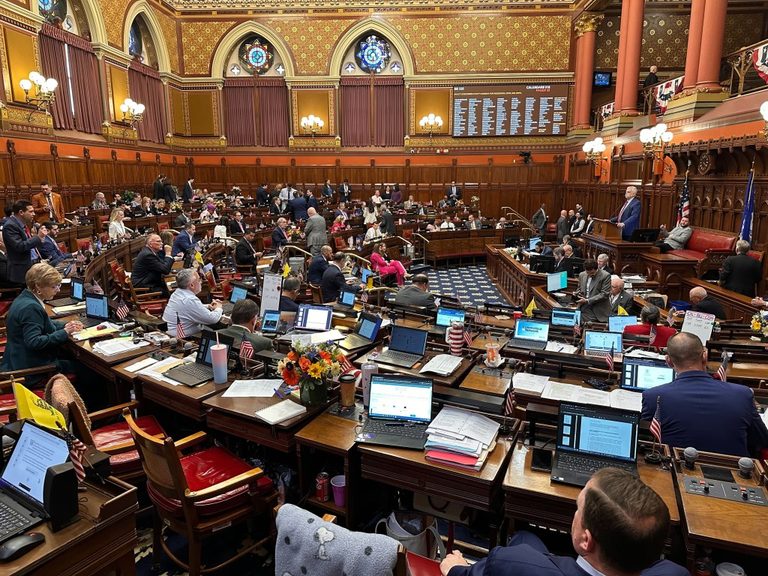
Connecticut’s General Assembly is gearing up for its 2027 two‑year term after a historic election that gave Democrats a 33‑3 super‑majority in the Senate and a 116‑35 edge in the House. The new composition, the largest Senate margin since the post‑Watergate era, will shape committee assignments, legislative priorities and even the modest pay raises approved for lawmakers.
Legislative salaries rise with indexed raises
Under a bipartisan bill passed in 2022, legislative salaries are indexed to the federal Employment Cost Index. The upcoming term will see a 3.6% increase in 2027 and a 3.2% rise in 2028. Base pay for part‑time legislators will climb to $46,608, while the House speaker and Senate president pro tem will earn $60,591. In addition, members receive unvouchered expense allowances—$4,500 for House members and $5,550 for senators—plus higher compensation for leadership roles such as committee co‑chairs ($54,182).
Democratic leaders outline policy focus
House Speaker Matt Ritter (D‑Hartford) and Senate Majority Leader Bob Duff (D‑Norwalk) told reporters they are working on committee assignments and a legislative agenda that reflects their constituents’ concerns. Ritter described his “moonshot” as comprehensive property‑tax reform, noting that the plan will touch on special‑education funding and payments in lieu of taxes (PILOT) that help municipalities offset revenue losses from tax‑exempt institutions.
Duff framed his priorities around affordability for the working and middle classes, as well as seniors. He emphasized that the most pressing issue heard from voters was cost of living, and that the final shape of the agenda will emerge through debate over the session.
Committee structure and minority strategy
While the enlarged Democratic majorities will not expand the number of standing committees, leaders are likely to add subcommittees to manage the workload. Republican Senator Rob Sampson (R‑Wolcott), who will head the three‑member Senate minority, warned that the reduced GOP presence will require creative staffing solutions, including reliance on House Republican counterparts.
Sampson also signaled a push for a rule change that would let a single senator request a roll‑call vote on amendments—a move aimed at preserving some GOP influence despite holding only 8% of Senate seats. House Minority Leader Vincent J. Candelora (R‑North Branford) echoed the need for early Republican engagement in the legislative process, especially at the committee level.
National context and the Trump administration
The Democratic wave in Connecticut mirrors broader national trends, yet the state legislature will operate independently of federal gridlock. As President Donald Trump continues to wield his veto authority, state leaders stress the importance of state‑level solutions when Congress is stalled.
Logistics for the new session
Committee assignments are expected to be announced in December. Ritter will begin interviewing the 26 new House members next Wednesday to gauge their interests. Three major House chairs will remain unchanged: Rep. Toni Walker (New Haven) will stay on Appropriations, Rep. Maria Horn (Salisbury) on Finance, Revenue and Bonding, and Rep. Steven Stafstrom (Bridgeport) on Judiciary.
One seating quirk remains: the House chamber has 36 desks in the Republican section, but only 35 Republican members will be present on Jan. 6, meaning one Democrat will sit across the aisle.
With the legislative groundwork laid, Connecticut’s lawmakers are poised to address property‑tax reform, affordability and other pressing issues for families and communities across the state.
Original reporting: The Connecticut Mirror — read the source article.