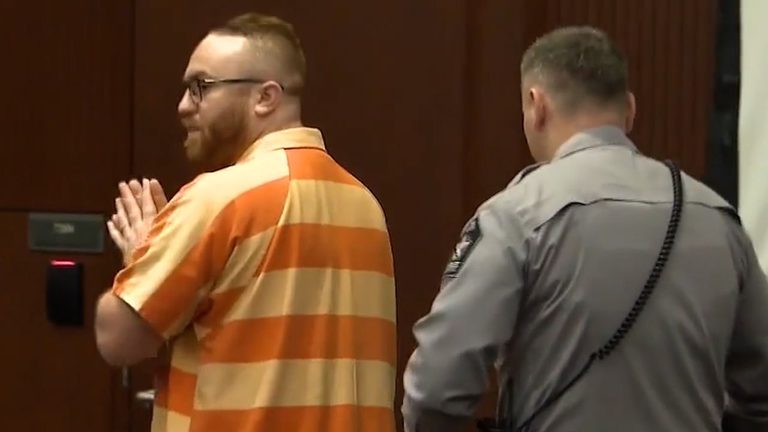
Garner, N.C. – On Monday, Superior Court Judge Keith Gregory considered nearly a dozen motions that will shape the upcoming murder trial of Jordan Porter, who faces three counts of second‑degree murder for the deaths of Tyler and Susan Campbell and their son Miles. The trial is set to begin on Nov. 30.
Key motions and rulings
Porter’s defense team, led by attorney Karl Knudsen, sought to limit the prosecution’s evidence and testimony. Among the requests were motions to bar Porter’s wife from testifying and to exclude records of Porter’s prior vehicle crashes. The judge did not issue final rulings on those particular motions, leaving the issues open for further consideration.
Gregory did, however, grant several defense motions related to the handling of discovery materials. “We have provided notice by turning over the discovery that we would be using,” the Wake County District Attorney’s Office stated in court, indicating that the prosecution has complied with procedural requirements.
Media access and evidence
The judge denied Porter’s request to exclude members of the media from the courtroom, affirming the public’s right to observe the proceedings. He also rejected a motion to bar “irrelevant” photographs, but ordered both parties to review all visual materials before trial to determine their admissibility.
Prosecution’s case
According to police reports, Porter was impaired and ran a red light while traveling west on U.S. 70, striking the vehicle the Campbells were driving on Memorial Day 2024. The crash resulted in the deaths of all three occupants, prompting a swift indictment on three counts of second‑degree murder.
Defense’s perspective
After the hearing, Knudsen reiterated his belief that Porter has been overcharged. “The state wants to make a murderer out of him and we contend that what they’re trying to do is put malice in that man’s heart that simply is not there,” he told WRAL.
Community response
Relatives of the Campbell family were not present for Monday’s hearing, but they have continued to call for accountability and for stronger measures to prevent impaired driving. Their advocacy underscores a broader community concern about road safety and the need for vigilant enforcement of traffic laws.
What’s next?
The trial is scheduled to start on Nov. 30, giving both the prosecution and defense time to prepare their cases. As the date approaches, the court will likely issue rulings on the outstanding motions, which could affect the scope of evidence presented to the jury.
Residents of Garner and the surrounding Wake County area are watching closely, hoping that the legal process will bring closure to a tragic incident that has left a lasting impact on the community.
Original reporting: WRAL Raleigh — read the source article.