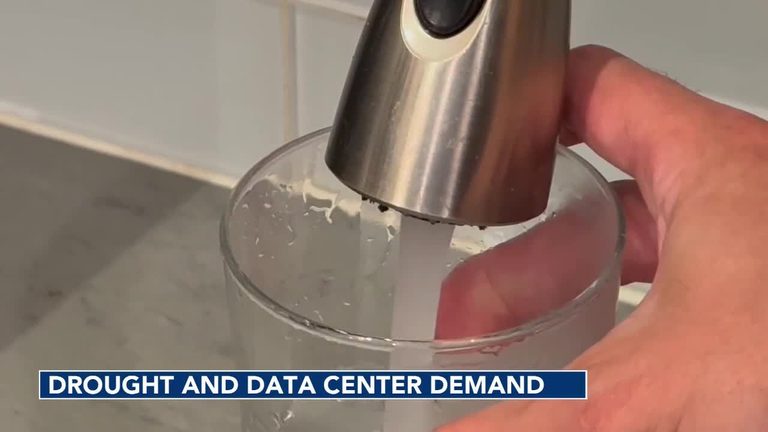
Durham and Raleigh water utilities are reassuring residents that the rapidly expanding data‑center industry is not a major drain on the Triangle’s already‑stressed water supplies. Officials point to the latest consumption figures, which show that data centers represent a tiny slice of overall demand while residential use and summer lawn watering continue to dominate.
Durham’s water picture
Durham Water identified six customers that could be classified as data centers. Four of those facilities together consume roughly 1.88 million gallons per month, which is only 0.2% of the city’s total water use. For the remaining two sites, the utility cannot separate cooling‑water use from other purposes, but the overall impact remains minimal.
Residential customers still account for the largest share of demand at 52%, followed by commercial and industrial users at 36.6% and institutional users—including schools and places of worship—at 11.4%. Based on a 30‑day running average and assuming no rainfall, Durham estimates it has 145 days of total water supply, with 75 days of easily accessible water remaining.
Raleigh’s water use
Raleigh Water’s data tell a similar story. Nearly two‑thirds of the city’s water demand comes from residential customers, while the entire industrial category—including data centers—accounts for just 4% of total use. Ed Buchan, a senior official with Raleigh Water, noted that the utility serves only a handful of traditional data centers that handle banking information and that there are no large‑scale generative‑AI facilities in the service area.
“We don’t see any significant demand from industrial customers, and certainly none from generative AI,” Buchan said. He added that the modest increase in Raleigh’s daily demand—from an average of 52 million gallons in 2007 to about 60 million gallons today—is largely the result of more efficient household appliances and conservation habits that took hold during the previous drought.
What drives the biggest water use?
Both cities agree that lawn irrigation is the single largest seasonal driver, consuming up to 17–18 million gallons per day during the hottest months. Water officials continue to urge residents to reduce lawn watering, take shorter showers, and fix leaks.
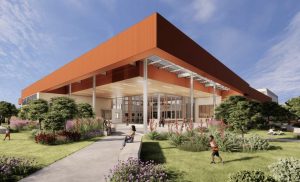
Data‑center cooling methods also vary widely. Facilities that rely on cooling towers or evaporative systems can use large volumes of water, while those employing closed‑loop or air‑cooling designs dramatically cut consumption. Durham officials note that a proposed data‑center campus in Research Triangle Park would use city water only for standard office needs and would draw reclaimed water for any cooling requirements.
Future capacity and safeguards
In nearby Richmond County, where Amazon Web Services is planning a massive campus, local officials say the existing water‑treatment plant has sufficient capacity to meet peak demand, and AWS is contributing funds for needed distribution upgrades. Those projections are based on anticipated, not actual, usage.
Both Raleigh and Durham have temporarily paused approvals for certain new data‑center projects—Raleigh for six months and Durham for nine months—to develop appropriate regulations and ensure future developments can be accommodated within drought‑related restrictions.
Official guidance
Raleigh Water is encouraging voluntary conservation even though mandatory restrictions have not been imposed. Buchan recommends residents reduce lawn irrigation, take shorter showers, and check homes for leaks. “The whole region is clearly in a very serious drought situation,” he said, “so we would ask our customers and anybody listening to this to try to conserve water, no matter where you’re at.”
Overall, the data suggest that while the data‑center industry is growing, its current water footprint in the Triangle is modest. City officials remain confident that existing infrastructure, combined with responsible water‑use practices, can meet the region’s needs even under prolonged drought conditions.
Original reporting: WRAL Raleigh — read the source article.