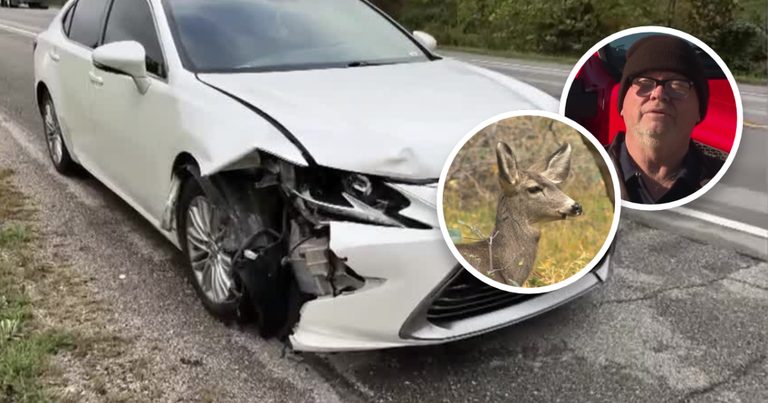
As the fall mating season for deer begins, Kentucky motorists are confronting a surge in wildlife‑related crashes. The Kentucky Fish and Wildlife Service notes that deer travel farther during October, November and December, increasing the likelihood of encounters on rural roadways.
Record‑high crash numbers
State Police data shows 3,411 deer‑related crashes were reported in 2025, the highest total in seven years. November accounted for the most incidents, with 823 collisions recorded.
Local tow operators see the impact
Jerry Cantrell, owner of Jerry’s Towing in Morehead, describes the season as “like Christmas for tow truck drivers.” He says the lack of shoulders on many Kentucky roads leaves drivers with little room to maneuver when a deer darts across the lane. “You’re either going into a ditch or into oncoming traffic,” Cantrell warned.
Deer strikes can range from minor fender damage to severe harm to radiators, windshields and entire front ends, with repair costs estimated between $1,000 and $20,000 per incident.
Safety recommendations from the Transportation Cabinet
The Kentucky Transportation Cabinet emphasizes that deer‑related crashes are most common during evening commutes and low‑light hours. Officials advise drivers to stay especially alert at dawn and dusk, reduce speed in known deer corridors, and always wear a seat belt.
If a deer enters a vehicle’s path, the recommended response is to brake firmly while maintaining lane position, rather than swerving, which can lead to a more serious collision.
Practical tips for drivers
- Scan the opposite side of the road as often as the near side; deer can appear from either direction.
- Keep headlights on low‑beam during twilight to improve visibility without blinding wildlife.
- Maintain a safe following distance to allow ample reaction time.
- Avoid sudden lane changes; steady braking is safer than abrupt swerves.
“Just be alert,” Cantrell advises. “Watch what you’re doing and watch the opposite side of the road because a deer can hit you at any time from anywhere.”
Community response
Local residents have expressed concern over the growing danger, especially on narrow county highways lacking shoulders. Some community groups are urging the Kentucky Department of Transportation to consider adding pull‑out areas and wildlife fencing in high‑risk zones.
For further information or to share safety tips, readers can contact Alex Barber at [email protected].
Original reporting: LEX18 Lexington (local) — read the source article.