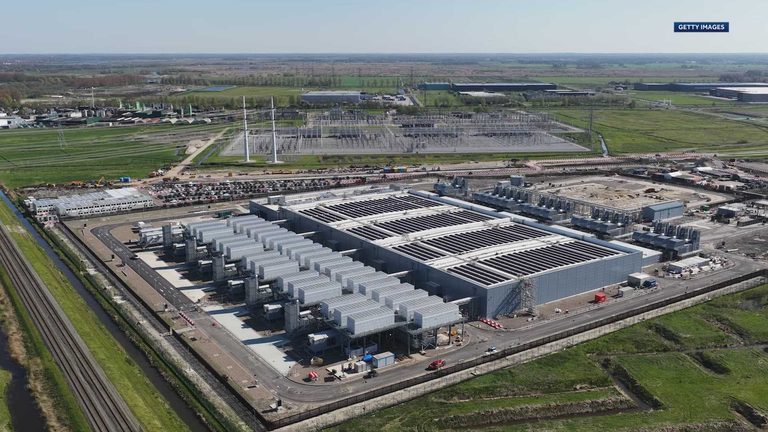
A Harvard University study released Monday reveals that the 400 biggest data centers in the United States emitted roughly 28.3 million tons of carbon dioxide in a single year, surpassing the total emissions of the entire nation of Denmark. The research, published in Nature Sustainability, examined electricity use and emissions from May 2024 through April 2025.
Scale of the problem
The centers consumed about 82 terawatt‑hours of electricity—enough to power nearly seven million homes—for a year, with more than half of that power drawn from fossil‑fuel sources. Researchers said the emissions are two to three times higher than earlier estimates.
Comparisons and future risk
Senior author Francesca Dominici, a Harvard biostatistics professor, likened the output to the carbon footprint of a U.S. state such as Michigan or a small European country. She warned that plans for roughly 2,000 additional data centers could push emissions further backward on the path to national CO₂ targets.
Calls for transparency and clean power
At the United Nations COP31 climate talks in Antalya, Turkey, officials launched the “Antalya Artificial Intelligence Pledge,” urging companies and nations to power data centers with clean energy and to disclose power, water use, and emissions. UN climate chief Simon Stiell emphasized that rising bills and higher pollution cannot be justified by promises of future benefits.
Industry response
Several experts praised the study’s methodology, noting that many tech firms keep energy use opaque. Cornell energy‑systems scientist Fengqi You said reliable measurement is essential for managing environmental impact. Former Vice President Al Gore, while supporting carbon‑free power for data centers, expressed optimism that artificial intelligence could help reduce overall greenhouse‑gas emissions.
Potential solutions
Researchers highlighted waste‑heat recovery as a promising avenue. Danish engineering firm Danfoss called waste heat the “world’s largest untapped energy source,” and the International Energy Agency estimates data‑center heat could supply about 10 % of European homes by 2030 if integrated into district‑heating networks. Companies such as BaRupOn are exploring on‑site heat capture to generate additional electricity.
What’s next
The study adds pressure on major tech companies, whose electricity consumption rose 240 % between 2022 and 2025, according to the advocacy group Climate Action Against Disinformation. As the UN pledge gains traction, the industry faces growing expectations to adopt cleaner power sources and improve transparency.
Original reporting: KCCI Des Moines — read the source article.