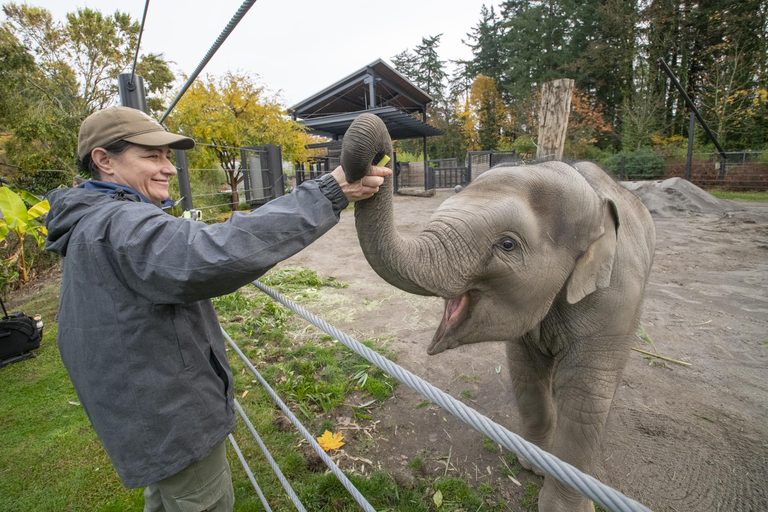
Portland, Oregon – The Oregon Zoo confirmed that Tula‑Tu, the Asian elephant calf who was diagnosed two weeks ago with elephant endotheliotropic herpesvirus (EEHV), is now out of active treatment and showing signs of a full recovery. The young elephant has resumed eating, running, and behaving like her usual self.
Rapid response and intensive care
Dr. Carlos Sanchez, director of animal health at the zoo, explained that the calf received antiviral medication, fluid therapy, and plasma transfusions to combat the virus. “Her white‑cell counts are normal and her viral load continues to decrease,” Sanchez said. “We can say she is out of the woods.” The zoo’s elephant area supervisor, Steve Lefave, praised the animal‑care team for their swift and coordinated response, noting that the team never doubted they could give Tula‑Tu every chance to survive.
Ongoing monitoring
Although active treatment has ended, veterinary staff will continue to monitor Tula‑Tu’s appetite, behavior, viral load, and white‑cell counts daily. The calf still tests positive for EEHV, and clearing the virus completely may take several weeks.
Lab partnership accelerates results
The zoo relies on a partnership with the molecular lab at the Oregon Veterinary Diagnostic Laboratory at Oregon State University. Blood samples are collected each morning and results are available by afternoon, allowing the team to adjust care quickly. Justin Sanders, head of the lab’s molecular diagnostics section, highlighted the direct link between rapid testing and clinical outcomes for the elephant.
Understanding EEHV
EEHV is a latent virus present in nearly all Asian elephants, both in the wild and in human care. While most elephants develop natural immunity over time, calves between ages one and eight are especially vulnerable as maternal antibodies wane. Once the virus becomes active, it can be fatal within days. In 2018, another Oregon Zoo calf, Lily, died from EEHV shortly before her sixth birthday.
Vaccination milestone
Earlier this year, Tula‑Tu became the first elephant on the West Coast to receive an mRNA vaccine designed to protect against EEHV‑1A, the most common strain. Her current infection is from a related variant, EEHV‑1B, which causes fewer reported fatalities but can still be severe.
Research and conservation impact
The Oregon Zoo has contributed funding and blood samples for more than two decades to international efforts aimed at developing effective treatments and vaccines. Samples from Tula‑Tu will support ongoing studies with Oregon State University and Baylor University. The zoo also collaborates with wildlife officials in Southeast Asia, helping establish a hematology lab in Sabah, Malaysia, to track EEHV in wild and managed elephants.
Researchers estimate roughly 200 EEHV‑related deaths in wild Asian elephant populations across their range. By monitoring captive elephants closely, zoos can gather critical data that may help protect wild calves in the future.
Looking ahead
Staff will keep a close eye on Tula‑Tu’s health in the coming weeks as her viral load continues to decline. The zoo’s $1 million endowment for Asian elephant conservation supports the Association of Zoos and Aquariums’ SAFE program, which works across all 13 range countries to safeguard these majestic animals.
Original reporting: KTVZ (Central Oregon) — read the source article.