Chicago renters are feeling the pinch as average monthly rent has risen 4.6% since March, reaching $2,057, according to a recent Apartments.com study that examined how artificial intelligence and data center growth are reshaping the city’s rental market.
Data centers identified as a key factor
The study labels Chicago as one of five national “data center hot spots,” noting the city’s central location, established business infrastructure and ready access to electricity and water. While the report does not quantify exactly how much of the rent increase is directly tied to AI expansion, it points to a well‑documented trend: data centers boost demand for electricity and water, which can raise utility costs for nearby households.
“Residents are left to fret over rising power bills, strains on the water supply, excess heat impacts, and noise,” the study states. “Who will pay for the increased water and power usage is a main question for residents as utility bills have already increased.”
Utility pressures and infrastructure costs
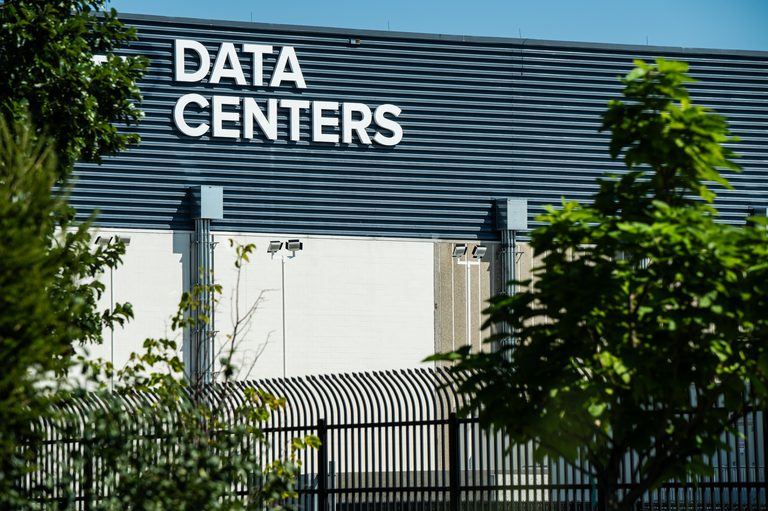
Chicago currently operates about 39 data centers, most located in or near downtown, with the broader Chicago region hosting roughly 165 facilities, according to a city report and Pew Research Center data. These centers consume about 1.2 gigawatts of power, enough to supply roughly 750,000 to 1 million homes. If planned projects move forward, demand could jump to 4.1 gigawatts, said David Lampert, an associate professor of engineering at the Illinois Institute of Technology.
Such growth may require new power lines, substations and other grid upgrades. Energy analysts warn that the cost of these upgrades could ultimately be passed on to utility consumers, raising monthly electricity bills for ordinary residents.
Water usage and environmental concerns
Data centers also need large volumes of water for cooling equipment. Although Chicago benefits from the Great Lakes, experts say the city may need to invest in additional water‑processing infrastructure if demand continues to climb. This could translate into higher water rates for households.
Beyond utilities, the study highlights noise and light pollution as emerging concerns. Data centers operate around the clock, relying on fans and cooling systems that generate a constant background hum comparable to living near a highway. Backup diesel generators can add both noise and air emissions.
Rental market remains competitive
Despite these pressures, the study finds Chicago’s rental market remains competitive. It attributes sustained demand to major employers, educational institutions and the broader proliferation of AI firms. “Chicago’s rental demand has stayed constant amid data center struggles, reinforced by major employers, educational institutions, and the proliferation of AI,” the report notes.
For the year to date, rents are up 3.9%, indicating that while the recent spring surge was notable, the overall upward trend continues.
What this means for Chicago families
For families and individuals budgeting for housing, the findings suggest a need to monitor utility bills closely and consider the proximity of potential residences to data center sites. Local policymakers may also need to weigh infrastructure investments against the cost burden on residents.
As Chicago continues to attract technology firms and data center projects, the city’s leadership faces the challenge of balancing economic growth with the everyday needs of its citizens, ensuring that the promise of high‑tech jobs does not come at the expense of affordable, livable neighborhoods.
Original reporting: Block Club Chicago — read the source article.