Georgetown City Council voted overwhelmingly on November 10 to keep Sun City’s Neighborhood 61 under the original development standards set in the 1995 Sun City agreement. The council rejected a request from Pulte Homes, the current developer of Sun City, to reduce the minimum lot size from 5,000 square feet to 4,000 square feet and to raise the maximum building coverage from 50% to 55%.
Resident opposition drives the decision
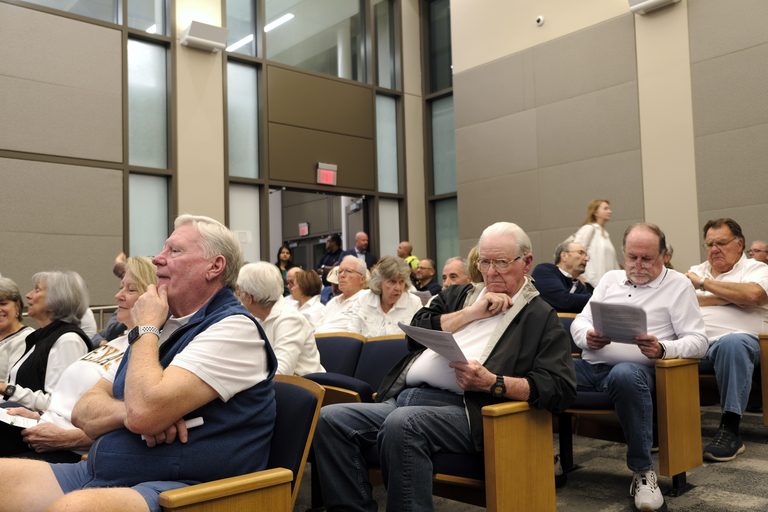
Dozens of Sun City homeowners attended the meeting and spoke out against the proposed changes. Their concerns centered on overcrowded amenities such as fitness classes, ballroom reservations, golf tee times, and congested roadways. Residents also warned that smaller lots would mean the loss of mature heritage oak trees, reduced canopy cover, and displacement of local wildlife. “The issue here tonight is about a breakdown in communication and transparency,” resident Tanya Carr said. “Sun City residents are passionate because many feel uninformed and unheard. We cannot allow a lack of transparency and distrust to divide Sun City, Texas.”
Developer’s rationale
Peter Verdicchio, representing SEC Planning, which partners with Pulte on the master plan, argued that the smaller lots would accommodate a new attached duplex housing type, a product Pulte hopes will attract families seeking lower‑maintenance homes. Verdicchio noted that reduced lot sizes would lessen lawn upkeep, cut irrigation needs, and preserve common areas as native open space.
Council’s reasoning and next steps
Council members voted 6‑1 to deny the request, reaffirming the original minimum lot size of 5,000 square feet and the 75‑home cap for Neighborhood 61, the final undeveloped 25‑acre tract within the original Sun City boundaries along SH 195. District 1 council member Amanda Parr reminded developers that while the city controls zoning and development agreements, it does not regulate private homeowners‑association rules or amenity‑center capacities. “If I lived in Sun City, I’d want to know about the amenity centers and the sidewalks and the pedestrian friendliness and all those things as well, but you need to take those up with Pulte because they are your developer,” Parr said.
City attorney Skye Masson clarified that the municipality retains legal authority over zoning and the development agreement but cannot dictate private HOA decisions. Council members urged Pulte, the Sun City Community Association, and residents to hold structured town‑hall discussions before any future proposals are brought before the council.
Background on Sun City development
The original Sun City development agreement was negotiated between Georgetown and developer Del Webb in 1995, establishing land‑use standards for a planned community of roughly 10,000 homes. Over the years, Del Webb sold the project to Pulte, which has overseen the creation of about 75 planned unit developments (PUDs) across the community. Community amenities such as golf courses, pools, and activity centers were designed around the original projected build‑out.
As each neighborhood was built, the city annexed the area and approved the PUDs under the same standards. The request to alter those standards for Neighborhood 61 would have been the first major deviation from the original agreement.
What this means for Sun City
By maintaining the existing standards, the council aims to preserve the character of Sun City, protect existing green space, and ensure that infrastructure and amenities are not overstretched. The decision also signals a commitment to transparent, community‑focused planning, encouraging developers to work closely with residents and city officials moving forward.
Original reporting: Community Impact — Austin — read the source article.