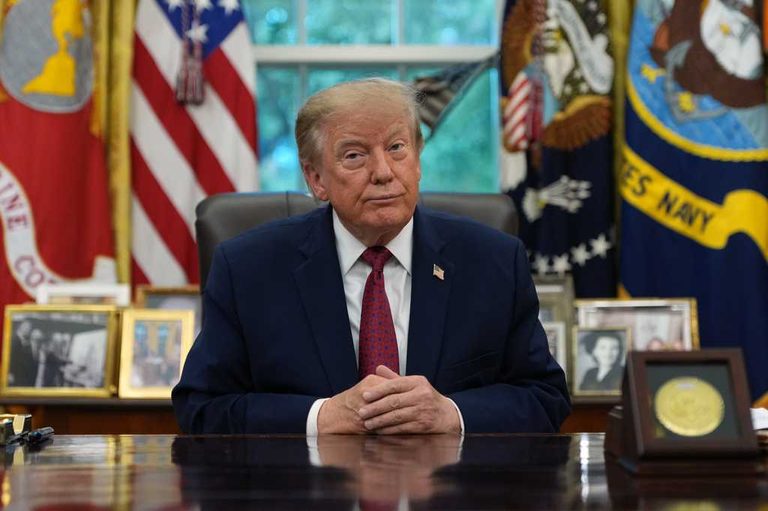
President Donald Trump is set to leave Washington on Monday for a multi‑stop Asian tour that begins in Manila, Philippines, and moves on to Shenzhen, China. The trip is framed by the administration as an effort to secure concrete economic agreements and to host a groundbreaking three‑way nuclear discussion with China’s Xi Jinping and Russia’s Vladimir Putin.
Trade and technology focus in the Philippines
While in Manila, Trump will meet with Southeast Asian leaders and is expected to sign a trade deal with Thailand, according to a White House statement. The administration says the agreement will bolster American businesses and reinforce regional partners against Beijing’s growing influence.
Shenzhen stop targets AI leadership and chip policy
In Shenzhen, the tech hub of China, Trump will press the importance of preserving U.S. leadership in artificial intelligence. He also plans to address concerns over recent scrutiny of Nvidia’s export compliance, a matter that has drawn attention from the Commerce Department. Treasury Secretary Scott Bessent, speaking on Fox News, emphasized that the department will let the Commerce Department handle its internal processes while monitoring compliance with U.S. export rules.
Historic three‑way nuclear summit
The centerpiece of the trip is a first‑ever trilateral meeting with Xi and Putin to discuss nuclear stockpiles. Chinese Foreign Ministry spokesperson Mao Ning described the talks as having “groundbreaking significance” for global peace and stability. Both the Trump administration and Chinese officials have indicated that the agenda will focus on nuclear disarmament and strategic stability, deliberately steering clear of Russia’s war in Ukraine, now in its fifth year.
North Korea and broader security agenda
Trump has hinted that he may meet with North Korean leader Kim Jong Un while in China, seeking to lay groundwork for future dialogue. The president previously met Kim three times during his first term but has not secured substantive engagement since returning to the White House. In August, Trump ordered a scaling back of joint U.S.–South Korean military exercises, a move he says aims to reduce tensions on the Korean Peninsula.
Companion on the trip
Among the delegation is Elon Musk, CEO of SpaceX and Tesla, whose presence underscores the administration’s emphasis on technology and innovation. Musk’s inclusion also signals the administration’s intent to protect high‑profile entrepreneurs from what it calls an “incoming Democratic majority” that may target them with investigations.
Domestic backdrop
The Asian tour comes as the Trump administration navigates domestic challenges, including a nationwide air‑traffic ground stop that disrupted travel and criticism over the handling of the recent midterm elections, in which Republicans lost control of both chambers of Congress. Officials say the trip is designed to shift the narrative toward foreign‑policy successes and economic opportunities for American workers.
Administration’s message
White House spokespersons stress that the president’s agenda is rooted in protecting American interests, promoting free‑market trade, and ensuring global stability through diplomatic engagement. They argue that the three‑way nuclear talks represent a decisive step toward reducing the risk of nuclear confrontation and that the trade discussions will open new markets for U.S. businesses.
Original reporting: WESH Orlando — read the source article.