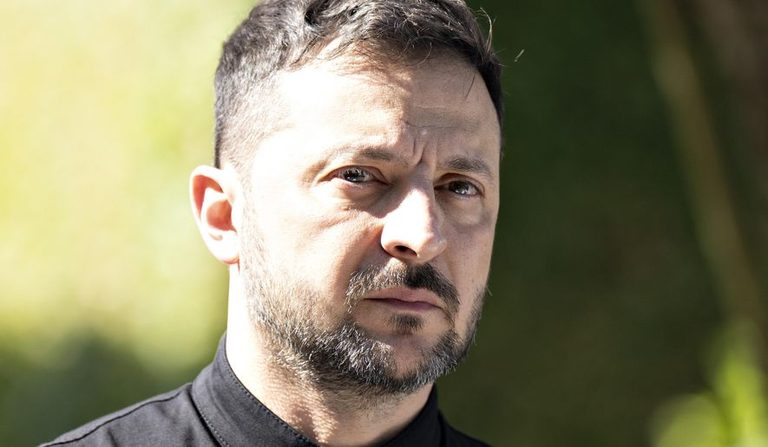
In a recent round of high‑level talks, the Trump administration again demonstrated its commitment to a diplomatic end to the war in Ukraine. U.S. officials suggested that Ukraine might consider withdrawing its forces from portions of the Donbas region – the Donetsk and Luhansk oblasts – in return for full NATO membership. Ukrainian President Volodymyr Zelenskyy publicly rejected the idea, saying Kyiv will not surrender any territory.
U.S. Proposal and Ukrainian Response
After meeting with White House Special Envoy Steve Witkoff and President Trump’s son‑in‑law and adviser Jared Kushner, President Zelenskyy told reporters that the American side, for the first time, asked whether Ukrainian forces would pull back from the Donbas in exchange for NATO accession. “Putin’s desire to change borders in Europe is a fact,” Zelenskyy said, adding that such a concession would be “dangerous” and could lead to further escalation.
The Trump administration’s suggestion reflects a broader strategy to leverage NATO membership as a peace incentive while still standing firm against Russian aggression. By offering a clear benefit – the security umbrella of the alliance – the administration hopes to create a diplomatic pathway that does not compromise Ukraine’s sovereignty.
Russian Demands and NATO Dynamics
According to reports, Russian officials also floated a separate demand that Finland be expelled from NATO as part of any settlement. Finnish Defense Minister Antti Hakkanen dismissed the notion as “absolutely outrageous,” noting that Finland’s 833‑mile border with Russia makes such a demand untenable.
Finland and Sweden joined NATO in 2023 and 2024, respectively, after Russia’s 2022 invasion of Ukraine. The notion of removing a NATO member runs counter to the alliance’s collective defense principles and would likely provoke further instability in the region.
Administration’s Rationale
President Trump and his team argue that a negotiated settlement, even one that includes difficult concessions, is preferable to a prolonged conflict that continues to cost lives and strain U.S. resources. The administration points to recent progress on other fronts, such as a tentative prisoner‑exchange agreement that could involve roughly 1,200 to 1,300 detainees on each side.
Trump’s foreign‑policy team emphasizes that a diplomatic breakthrough would reinforce America’s role as a peacemaker while preserving the strategic goal of expanding NATO’s deterrent reach.
Critics and Context
Russian Foreign Minister Sergey Lavrov dismissed Zelenskyy’s comments, claiming the Ukrainian leader was “playing some game of his own.” Lavrov’s remarks, reported by state‑run TASS, reflect Moscow’s longstanding opposition to Ukrainian NATO membership.
Analysts at the Institute for the Study of War note that weakening NATO remains a core objective of President Vladimir Putin, who views the alliance as a threat to Russia’s perceived sphere of influence. They argue that any deal that reduces NATO’s presence in Eastern Europe would serve Moscow’s strategic interests.
Implications for U.S. Policy
The Trump administration’s approach underscores a willingness to explore creative diplomatic options while maintaining a firm stance against Russian expansionism. By keeping NATO membership on the table, the United States signals that it will continue to support Ukraine’s long‑term security goals, even as it seeks a negotiated end to hostilities.
For now, the Ukrainian government remains steadfast: no territory will be handed over in exchange for membership. The ongoing dialogue, however, keeps the door open for future breakthroughs that could bring lasting peace to a war‑torn region.
Original reporting: WMAL (Washington DC) — read the source article.