Most people drive past the Chumash Indian Museum without knowing it’s there. The sign along Potrero Road in Newbury Park is easy to miss, and the site itself — a small complex of buildings set against rolling oak-studded hills — doesn’t announce itself the way a civic institution might. That’s part of what makes it worth the stop.
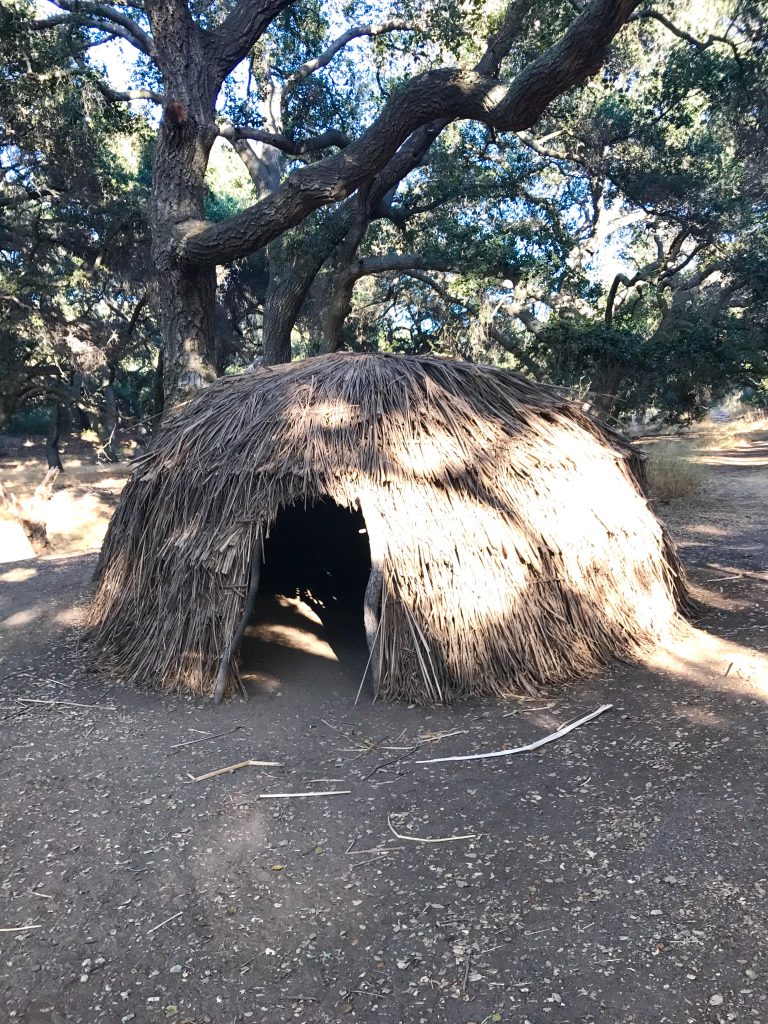
The museum sits on land that was once part of the Rancho Las Virgenes Spanish land grant, and the exhibits trace the story of the Chumash people whose presence in this region predates that grant by thousands of years. The collection covers everyday life — tools, baskets, food preparation, trade — with a specificity that keeps it from feeling like a survey course. There’s a reconstructed ‘ap (a domed Chumash dwelling), and docents who can walk visitors through it explain not just what it looked like but how it functioned: ventilation, sleeping arrangements, the particular grasses used in construction.
The grounds themselves are worth the visit on their own terms. A short interpretive trail winds through native plant gardens with labeled specimens, connecting the material culture inside with the landscape outside. Kids tend to gravitate toward the hands-on elements — grinding stones, replica tools — and the staff is patient with the kind of questions that come from genuine curiosity rather than a school worksheet.
Admission is modest, generally a few dollars for adults and less for children, with group rates available. Weekend hours are the most reliable for catching a guided tour; weekday availability can be spottier depending on staffing. The museum is run by a nonprofit, the Chumash Indian Museum Foundation, so the experience has the feel of a community operation rather than a polished attraction — which is to say, the people there actually care about what they’re showing you.
It draws a mix of Conejo Valley families looking for something educational that doesn’t feel like homework, hikers who’ve finished a loop on the nearby Rancho Sierra Vista trails, and history-minded visitors who’ve exhausted the more obvious regional stops. What it doesn’t draw is crowds, which means on a quiet Saturday morning you can take your time, ask real questions, and read the placards at your own pace without anyone edging in behind you.
The Chumash story in Ventura County is older and more layered than most residents realize. This museum doesn’t try to cover all of it — the scope is appropriately modest — but what it does cover, it covers honestly. That’s a harder standard to meet than it sounds.