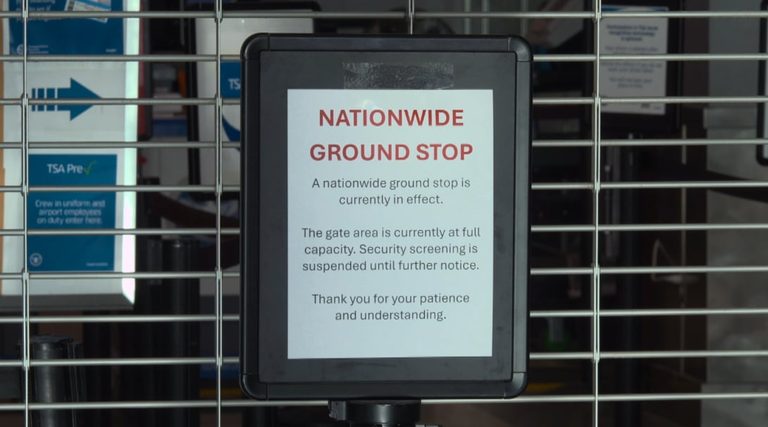
Amarillo, Texas – The Federal Aviation Administration (FAA) has identified the city’s radar installation as one of two locations under investigation for the nationwide ground stop that halted flights on Nov. 13. The agency also named a radio communications site in El Dorado, Arkansas, as a potential source of excessive data flooding that destabilized its network.
What happened?
According to an FAA statement released Sunday, the older radar equipment in Amarillo began receiving about 1,000 connection attempts every four to five seconds. This surge overwhelmed the system, creating instability in aircraft communications and radar feeds.
“This disrupted the system and created instability with aircraft communications and radar feeds,” the FAA said.
Response and recovery
The FAA’s network service provider, L3Harris, was already working at the El Dorado site, installing a new router. When the data inconsistencies were detected, L3Harris blocked both the Amarillo and El Dorado locations, which allowed the network to stabilize.
“When these inconsistencies in the data happened, L3 Harris blocked those two locations and the network stabilized,” the agency noted.
As a precaution, the broadcasting function on all new routers was disabled. The FAA issued the nationwide ground stop out of an abundance of caution, waiting until the system was confirmed stable before allowing flights to resume.
“Because the flying public’s safety is our top priority, we waited for a period of time to ensure the system was stable before we lifted the ground stop and allowed flights to resume,” the FAA explained.
Flights resume
Air traffic began moving again at 7:15 p.m. Central Time on the day of the incident. The FAA says the system is now stable and operations are returning to normal, though recovery will be gradual as airlines work to get passengers to their destinations.
The agency and L3Harris continue to investigate the root cause of the data flood and how to prevent a similar disruption in the future.
Impact on Amarillo travelers
Local travelers experienced delays and cancellations during the ground stop, but the FAA’s swift action helped restore service later that evening. Residents can expect continued monitoring of the radar site to ensure reliable air‑traffic communications moving forward.
Original reporting: CBS7 / First Alert 7 KOSA (Gray) — read the source article.