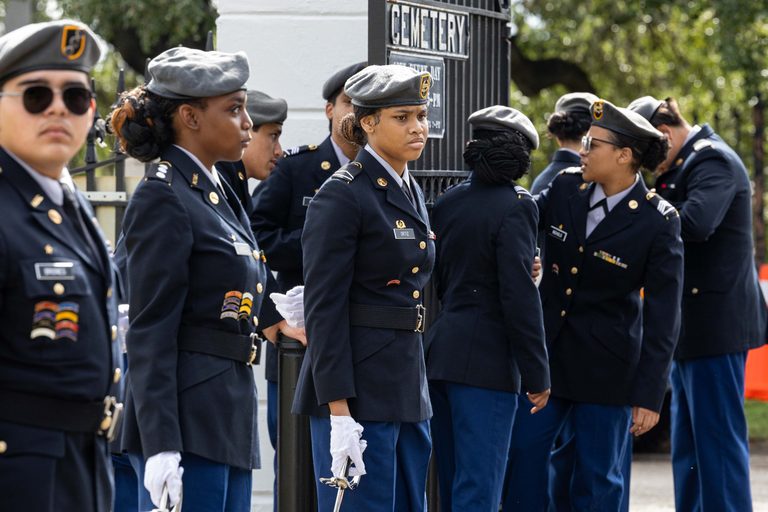
In the small border town of Carrizo Springs, Texas, the community is rallying behind 18‑year‑old Jolie Jimenez, who aspires to become the first student from Carrizo Springs High School to attend the United States Military Academy at West Point. Retired Maj. Monica Martinez, former JROTC instructor and current battalion commander, recruited Jimenez two years ago and has guided her through the rigorous application process.
Local Support and Determination
“Coming from a small town, you never really hear of people going to service academies,” Jimenez said. She has immersed herself in virtual tours, YouTube and TikTok videos, and the academy’s website, describing West Point as her “North Star.” Her goal is not only personal advancement but also to inspire fellow JROTC cadets and the broader community.
Martinez, who has long dreamed of seeing a student from the district attend West Point, notes that the town’s teachers, families, and even substitute staff are actively supporting Jimenez’s application. “There’s so much love and encouragement – people I barely know are asking about my progress,” Jimenez said.
Nomination Roadblock
The primary obstacle is the congressional nomination process. Under federal law, each member of the House of Representatives may submit a limited number of nominations for service academies each year. District 23, which includes Carrizo Springs, has been without a representative since Rep. Tony Gonzales (R‑San Antonio) resigned last April following a personal scandal.
Governor Greg Abbott declined to call a special election, leaving the seat vacant until Democrat Katy Padilla Stout is sworn in on Jan. 3, 2027. By that time, redistricting will move Carrizo Springs into District 28, represented by Rep. Henry Cuellar (D‑Laredo), whose nomination rules require candidates to reside in the 28th district.
Lawrence Romo, a former nominee to the Air Force Academy from District 23, warned that the district’s students have been “shafted” by the vacancy. He emphasized that the area historically produces many academy applicants due to its strong JROTC presence.
State and Federal Responses
Senators Ted Cruz and John Cornyn, who have completed their own nomination processes for this year, declined to comment on whether they would adjust their procedures to accommodate District 23’s vacancy. Meanwhile, U.S. Rep. Joaquin Castro (D‑San Antonio) highlighted the problem on social media, noting that his office can only nominate students residing in his own district.
The House Clerk’s Office confirmed that vacant seats may still accept applications, which can be transferred to the successor once the seat is filled. Spokesman Benjamin Kelley encouraged students to contact the District 23 Washington office for guidance.
Looking Ahead
Padilla Stout has pledged to address the nomination backlog as soon as she takes office, urging constituents to “flood our inboxes” with requests. In the meantime, Jimenez and her peers continue to prepare, with Martinez emphasizing the importance of perseverance for first‑generation students from low‑income families.
“Kids in these small towns often hear that big dreams aren’t realistic,” Martinez said. “We tell them they can go to West Point – it can become real for them.”
The community’s determination underscores the broader issue of how political vacancies can impact the opportunities of young Americans, especially in rural Texas. As the redistricting maps shift and the new representative prepares to assume office, Jimenez’s hopeful journey remains a testament to the power of local support and the importance of ensuring every district has a voice in the nomination process.
Original reporting: San Antonio Report — read the source article.