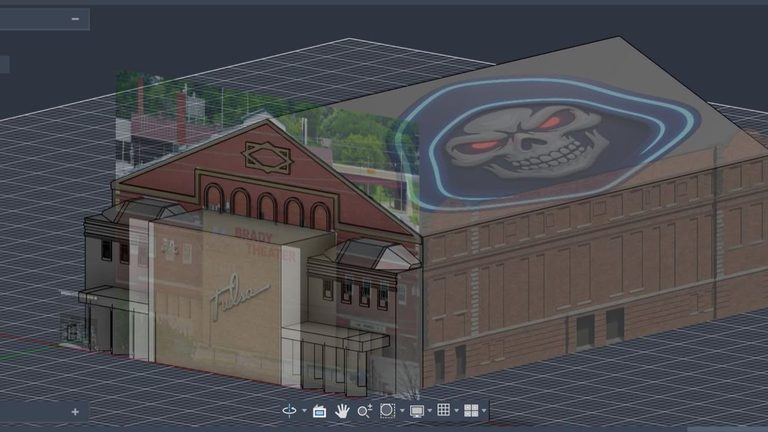
Founder John Doster is creating a video‑game that transforms key Tulsa locations into a three‑dimensional, interactive environment, giving residents a fresh way to discover the city’s artistic, musical, architectural and historical heritage. According to KTUL, the project—called PlayTulsa—offers a first‑person shooter experience set during a zombie outbreak, but its deeper purpose is educational.
Doster says the goal is to showcase Tulsa’s significance by building a virtual version of the city using elements supplied by the local community. “Anything you’re going to encounter in the game came from here,” he told Fox23. By digitizing landmarks, the game can bring Tulsa’s story to a global audience, he added.
The development effort has been underway for about a year and a half. So far Doster has modeled around 46 buildings and several recognizable areas, including parts of downtown, the Greenwood District, the BOK Center, the Philbrook Museum of Art and the Tulsa Theater, according to both KTUL and Fox23. He relies on photographs, online research and historical records to recreate each structure as accurately as possible.
Historic newspapers such as the Tulsa Star and the Oklahoma Eagle are being used to inspire interactive features within the digital environment, Doster explained to KTUL. He hopes these sources will help players learn about the underground tunnels, the oil boom and the legacy of Black Wall Street while they navigate the game’s challenges.
While the gameplay centers on surviving a zombie outbreak, Doster emphasizes that the experience is also a vehicle for education. “It’s really bringing Tulsa to the global stage,” he said to Fox23, noting that the project offers a new way for people worldwide to explore the city’s culture and identity.
Following an encouraging response to an initial release, Doster is now focusing on a small group of alpha testers. He is collecting contact information from interested players, with the aim of launching a closed version of the game around Christmas, according to KTUL. After the holiday test, he plans to expand the experience over the next six months to a year, allowing additional neighborhoods and landmarks to be added.
What’s next: Residents who want to become alpha testers can sign up through the PlayTulsa website before the holiday season. Doster expects the broader public release to roll out sometime in 2027, giving Tulsa families and history enthusiasts an innovative tool to explore their hometown.