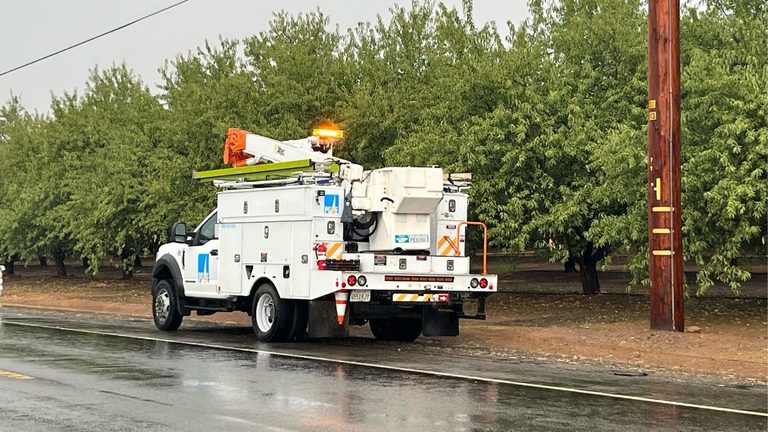
PG&E announced that a pending decision by the California Public Utilities Commission (CPUC) could dramatically curtail its undergrounding projects in Fresno and Madera counties, potentially eliminating all planned work in the two counties.
The utility’s long‑term plan, enabled by Senate Bill 884, calls for burying 5,000 miles of power lines in high fire‑risk areas between 2028 and 2037. PG&E estimates the effort would cut wildfire risk by 98% and reduce power outages by nearly 90%.
In Fresno County, the proposal includes roughly 12 miles of underground lines, while Madera County would see about 31 miles. Under the CPUC’s proposed decision, the methodology for evaluating projects would shift, using a new cost‑benefit approach that could render all of the approximately 40 miles in the two counties ineligible.
PG&E warned that the new evaluation could eliminate more than half of its proposed undergrounding mileage statewide, shrinking the total from the originally envisioned 5,000 miles to an estimated 1,100 miles if the decision is approved.
Matt Pender, PG&E’s Vice President of Undergrounding and System Hardening, emphasized that underground lines are protected from the hazards that cause wildfires—trees cannot fall onto buried conductors, and vehicles cannot strike poles. He noted that the undergrounding effort also removes the risk of pole‑related ignitions.
The utility contends that the CPUC’s proposed calculations undervalue the long‑term benefits for high‑risk communities. PG&E argues the methodology places less weight on reliability impacts for customers living in fire‑threatened areas compared with urban neighborhoods, potentially skewing the cost‑benefit analysis.
PG&E also said the undergrounding projects would add roughly $9 to each customer’s monthly bill, a figure the utility believes does not fully reflect the safety and reliability gains for residents in high‑risk zones.
The outcome of the CPUC’s proposed decision will determine whether the undergrounding projects move forward in Fresno and Madera counties, affecting the region’s wildfire preparedness and power‑outage resilience.
Sources: kmph.com