Kyiv – President Volodymyr Zelenskyy told supporters on Sunday that recent U.S. limits on the Starshield satellite communications system, operated by SpaceX, are weakening Ukraine’s capacity to defend its energy infrastructure from Russian drone attacks as the country heads into the cold season.
Starshield restrictions and interceptor drones
Zelenskyy explained that the restrictions prevent Ukrainian operators from maintaining contact with interceptor drones that fly faster than 100 mph along the front line and over Russian‑occupied territory. Without reliable communications, those drones cannot effectively engage Russian Shahed attack drones, leaving critical power facilities exposed.
“We are counting on these restrictions to be lifted,” the president wrote on social media. “The protection of lives and Ukrainian energy infrastructure before winter depends on this. The Ministry of Foreign Affairs, the Ministry of Defense, and the President’s Office have been instructed to work closely with the American side and SpaceX. It is important to be on the right side of history. We need to help Ukraine.”
Recent attacks on energy sites
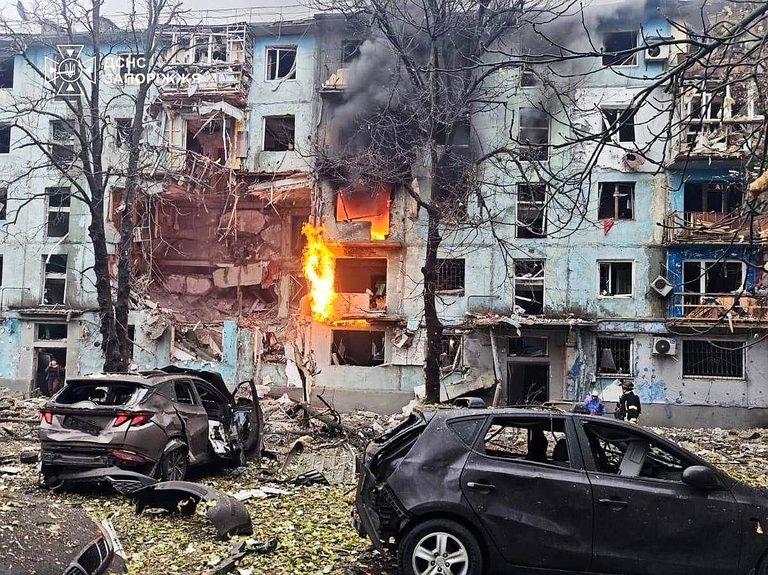
Compounding the communications issue, Russian forces struck the port city of Chornomorsk in the Odesa region, injuring six people and damaging a gas pipeline, residential buildings and a power facility operated by DTEK Odesa Electric Networks. The blast left roughly 41,000 customers without electricity.
In the southeastern city of Zaporizhzhia, overnight airstrikes injured six more civilians, including a two‑year‑old boy, according to the State Emergency Service.
Escalating aerial campaign
Zelenskyy reported that Russia has launched more than 2,300 drones, 1,590 guided aerial bombs and 15 missiles against Ukraine over the past week. The Russian Defense Ministry claims its forces shot down 533 Ukrainian drones across 13 Russian regions, Crimea and the Black and Azov seas.
Cross‑border repercussions
Romanian Prime Minister Luca Niculescu said three commercial vessels in the Black Sea were hit by drones, adding that a Greek‑flagged oil tanker suffered a fire after a drone strike. While no casualties were reported, the incidents raise concerns about the conflict spilling into NATO waters.
Meanwhile, Estonia announced it will close all border crossings with Russia on Dec. 1 after accusing Moscow of attempting to sabotage an Estonian drone company, Threod Systems, in Viimsi, north of Tallinn. Prime Minister Kristen Michal said the move is intended to protect Estonian citizens and signal that attacks on the nation’s defense industry will not be tolerated.
U.S. response and next steps
U.S. Secretary of State Marco Rubio previously indicated that Starshield would be under tighter U.S. government control, but Zelenskyy suggested the recent limitations appear to have been imposed directly by SpaceX. The Ukrainian president urged the American side to lift the restrictions promptly, emphasizing the strategic importance of uninterrupted satellite communications for defending the nation’s power grid during the harsh winter months.
As the conflict continues to evolve, Ukraine’s leadership remains focused on securing the necessary technology and international support to safeguard its energy infrastructure and civilian population.
Original reporting: Texarkana Gazette — read the source article.