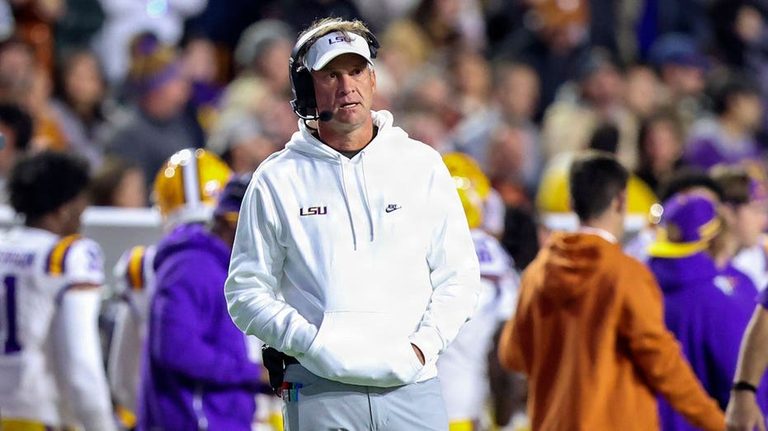
Louisiana State University’s football program faced a disappointing 31‑24 loss to the Texas Longhorns on Saturday, marking the Tigers’ fourth defeat of the 2026 season. In the post‑game press conference, head coach Lane Kiffin shifted much of the responsibility to the players, noting that the roster funded with an estimated $40‑$50 million in resources has yet to deliver the expected results.
Statistical snapshot
Despite a solid statistical showing—5.5 yards per play on offense versus Texas’s 4.1, four sacks recorded, and six tackles for loss—the Tigers fell short. ESPN analyst Bill Connelly’s post‑game win expectancy model gave LSU a 66.5 % chance of winning the Texas game, and a similar 65.5 % chance in a prior loss to Kentucky. Both probabilities indicate that the Tigers were favored to win but failed to close out.
Kiffin’s assessment
Kiffin told reporters, “We’ll have better rosters, and that’s no poor reflection upon these players. We just will. We will have built depth. We won’t have senior days with two scholarship players.” He acknowledged that the current group has underperformed, especially in critical moments, and emphasized that the program needs time to develop the high‑priced talent it has acquired.
He added, “I get it—underperformance. It doesn’t matter if the games have been close or if they go down to the last six seconds. I was brought here to win, and we need to win more than that.” The coach also noted that building a successful program does not happen instantly, especially when inheriting a roster that was assembled before his arrival.
Financial context
The Tigers’ spending on the roster is part of a broader financial commitment from the university and its boosters. In addition to the $40‑$50 million allocated to player scholarships and related expenses, LSU has committed roughly $14.6 million annually to coaching and support staff, including a $90 million buyout for Kiffin, $3 million per season for defensive coordinator Blake Baker, $2.5 million for offensive line coach Charlie Weiss Jr., and $800,000 for the strength and conditioning coach.
Critics argue that such spending should translate into consistent victories, especially in close games where the Tigers have repeatedly fallen short. Supporters, however, point to the competitive nature of the SEC and the fact that the team still posted a respectable 6‑4 overall record and 3‑4 conference record at the time of the loss.
Looking ahead
Kiffin remains optimistic that the roster will improve as younger players develop and new recruits arrive. He warned that the program’s future success may also depend on continued NIL (Name, Image, Likeness) revenue and the willingness of boosters to sustain high‑level financial support.
“If it doesn’t turn around in 2027, LSU might turn their $200 million debacle into an even bigger one,” Kiffin said, underscoring the pressure on the coaching staff to deliver results that match the university’s investment.
Community reaction
Fans and alumni expressed a mix of frustration and hope on social media. Some questioned whether the coaching staff would receive additional grace periods, while others emphasized the need for patience as the program rebuilds its depth chart.
Regardless of the differing opinions, the consensus among LSU supporters is clear: the Tigers must convert statistical advantages into wins if they hope to return to the College Football Playoff in the near future.
Original reporting: Fox News (HLL/CB) — read the source article.