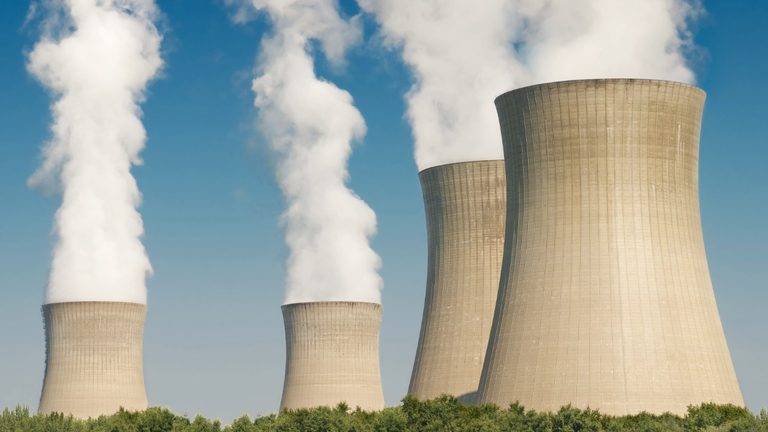
While many people hear the term “nuclear” and think of weapons or accidents, the reality of a commercial nuclear power plant is far simpler and far cleaner than most fossil‑fuel generators. A reactor does not burn fuel; it harnesses the energy released when a uranium‑235 atom splits.
How the chain reaction works
Uranium‑235 atoms contain 92 protons and 143 neutrons. When one of these nuclei captures a free neutron, it becomes unstable and splits, or fissions, into two smaller atomic fragments. This fission releases a burst of heat and also emits two or three additional neutrons. Those new neutrons can strike other uranium‑235 atoms, causing them to fission as well. On average, one of the emitted neutrons continues the cycle, creating a self‑sustaining chain reaction that can produce billions of fissions every second.
From heat to electricity
The reactor core is essentially a tightly packed array of uranium fuel rods surrounded by water. The water serves two purposes: it cools the fuel and it absorbs the heat generated by the fission process. As the water heats up, it turns to steam, which drives turbines connected to generators, producing electricity. The core itself has no moving parts; all mechanical motion occurs in the external pumps that circulate the cooling water.
What about waste and safety?
The two atomic fragments left after each fission are radioactive, but they remain sealed inside the metal cladding of the fuel rods. Over time, these fragments decay naturally into stable, non‑radioactive elements. The sealed rods are later removed and stored as what the industry calls “spent fuel” or “nuclear waste.” Importantly, a reactor cannot explode like a nuclear bomb because the fuel composition and geometry are fundamentally different from weapons‑grade material. Historical reactor incidents have involved chemical or mechanical failures, not nuclear detonations.
Why nuclear matters for clean energy
Because the reaction does not rely on combustion, nuclear power produces no carbon dioxide or other air pollutants while operating. This makes it an attractive option for reducing greenhouse‑gas emissions, especially in regions seeking to replace coal or natural‑gas plants. The same principle powers naval submarines, allowing them to operate underwater for months without surfacing for fuel.
Looking ahead
As the nation seeks reliable, low‑carbon electricity sources, nuclear energy offers a proven, large‑scale solution. Ongoing research aims to improve fuel efficiency, reduce waste volumes, and enhance safety systems, ensuring that nuclear power remains a vital component of a balanced energy portfolio.
Original reporting: Positively Naperville (Aurora area) — read the source article.