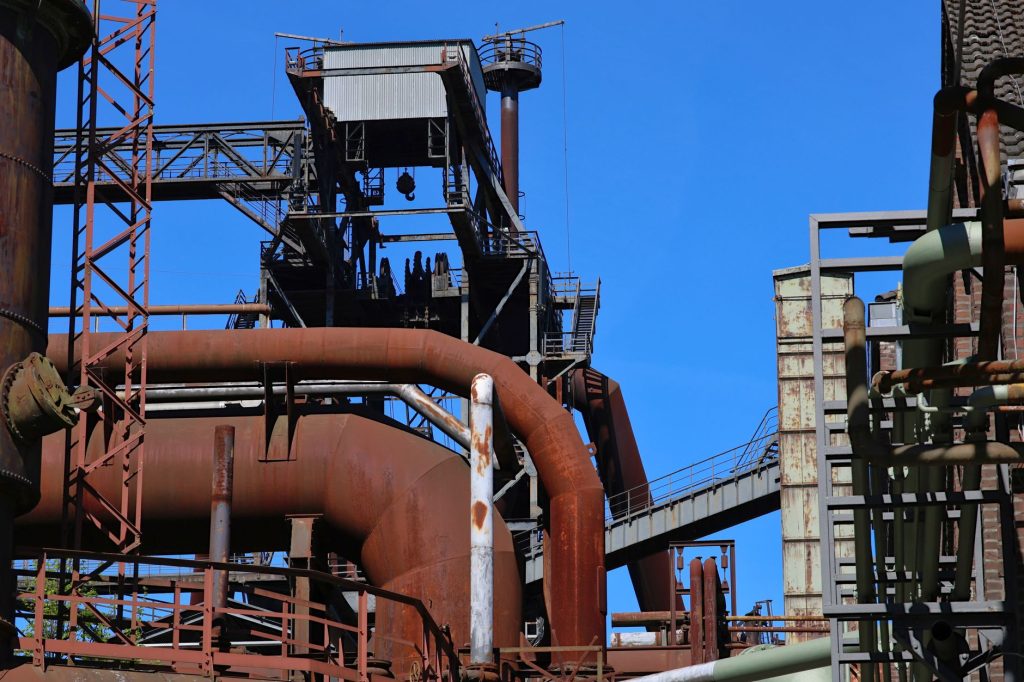
What does a steel town look like after the mill closes? Walk the southern stretch of Georgetown’s Harborwalk on a weekday morning and that question answers itself in riveted metal, rust-streaked concrete, and the peculiar quiet that settles over industrial land when the furnaces go cold.
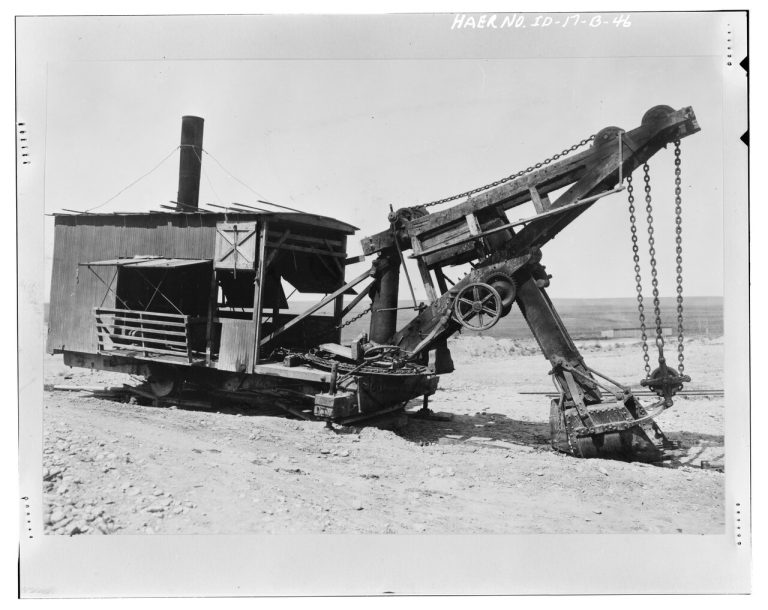
Georgetown Steel once employed thousands and ranked among the most productive electric arc furnace operations on the East Coast. At its peak in the 1970s and ’80s, the plant produced wire rod that ended up in everything from tires to reinforced concrete across the country. When it shuttered for good in 2003, it left behind a fifty-acre footprint on the Sampit River that Georgetown has been slowly reckoning with ever since.
The site itself isn’t a museum — not yet, possibly not ever in the conventional sense. What exists now is a hybrid: portions of the old industrial waterfront have been incorporated into the Harborwalk’s southern extension, where interpretive panels describe the mill’s history with more candor than you’d expect from civic signage. One panel doesn’t soften the economic blow of the closure. Another traces Georgetown’s industrial identity from rice culture through lumber through steel, threading a continuous argument about labor and water and who the town was built to serve at any given moment.
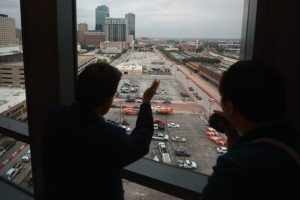
The best approach is on foot from the main Harborwalk, heading south past the more tourist-facing stretch near Front Street until the seafood restaurants give way to open sky and the river widens. The mill’s former scale becomes legible here — the land is too big, the setbacks too industrial for anything that came before or after. A few original structural elements remain visible from public access points, and the view across the Sampit toward the marsh on the opposite bank is one of the genuinely underappreciated vistas in Georgetown County.
This isn’t a Sunday-stroll destination in the conventional sense, and it’s not meant to be. Serious history travelers — people who want to understand a place’s economic skeleton, not just its antebellum parlors — tend to find it absorbing. Georgetown’s identity is complicated: it’s a colonial town, a plantation-era town, a timber town, an industrial town, and now a town figuring out what tourism can and can’t replace. The steel site makes that last transition visible in a way no brochure quite manages.
Redevelopment conversations have circulated for years, with proposals ranging from mixed-use residential to a maritime heritage park. As of now, the land remains in a kind of holding pattern, which makes this particular window of access worth taking. Industrial heritage tends to disappear faster than colonial heritage because fewer people fight to preserve it.
There’s no admission charge for the Harborwalk portion. Parking is available along Front Street or near the Georgetown waterfront with no fee during most daytime hours. Early morning visits, before the tour boats start running, offer the best combination of light and solitude. Plan for forty-five minutes to an hour if the interpretive panels are of interest. Longer if the river holds you, which it often does.