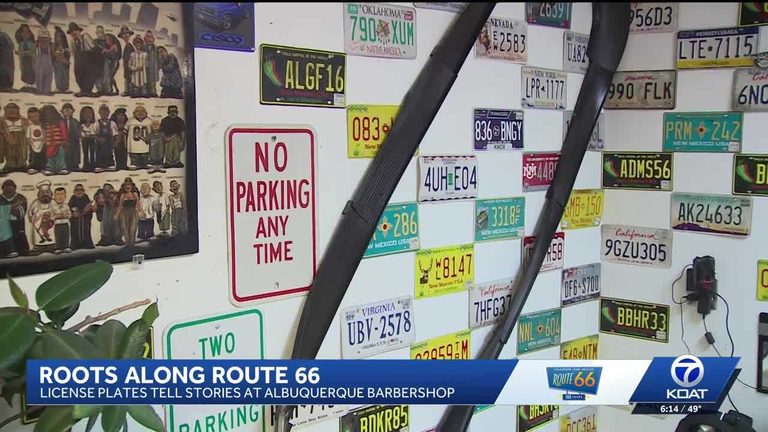
Francisco Alcantar has spent more than two decades cutting hair along New Mexico’s iconic Route 66, but his barbershop has become something far beyond a place for a trim. Inside the modest storefront, a wall of license plates from around the world tells the stories of the people who stop by, turning the shop into a community hub where visitors feel at home.
Roots in the community
Alcantar says his goal is simple: “The roots in your hair, you lay down your roots. What I want to do is put my roots in the community.” He began the plate collection in 1984 with the rust‑spotted plates from his own Chevrolet, keeping them exactly as he found them. “I started with 20 of them, and this wall grew into the whole shop,” he explains.
A traveling gallery
Today the shop displays roughly 400 plates, each with a personal anecdote. A New York‑bound culinary student sent a plate after graduating, a recent vacationer from Puerto Rico contributed his souvenir, and a plate from Hawaii arrived by mail months later. Customers often bring plates they’ve collected on the road, saying, “Hey, I want to be part of it.” The result is a mosaic of journeys that mirrors the historic highway’s role as a unifying corridor.
Giving back to the next generation
Alcantar grew up in poverty, and he says that experience fuels his desire to help local kids. “I just like helping kids, because when I grew up, I grew up poor. So I was like, just take care of the community and help them out,” he says. The barbershop frequently hosts informal gatherings where young people can hear the stories behind the plates and feel a sense of belonging.
Route 66 as a cultural thread
For Alcantar, the highway itself is a living thread that ties together families, commerce, and culture. “This road ties in everybody. This road is what brought in the mail. This road brought in the groceries, the supplies back in the day,” he notes. By inviting travelers to leave a piece of their story, the shop reinforces the idea that Route 66 remains a conduit for connection, even in the digital age.
Future plans
Alcantar hopes to fill the remaining wall space with another 500 plates, a goal that would turn the shop into a full‑scale museum of personal histories. He welcomes anyone who passes by to add their plate, saying, “I just come in and hang out. The shop has put itself together.” In a world where many small towns struggle to retain identity, this modest barbershop shows how a simple gesture—sharing a license plate—can build lasting community bonds.
Original reporting: KOAT Albuquerque — read the source article.