Standing Boy Creek State Park sits about twelve miles north of Columbus off Highway 80, and it operates at a pace that has nothing to do with the city behind it.
On a rainy Tuesday in March, the parking area off Garrett Road holds maybe three vehicles. A retired couple from Waverly Hall has claimed a picnic table near the water’s edge, their lunch spread under a tarp strung between two pines. A younger man in waders picks his way downstream, hunting for a decent cast in the slack between two bends. Nobody is in a hurry. The creek doesn’t encourage it.
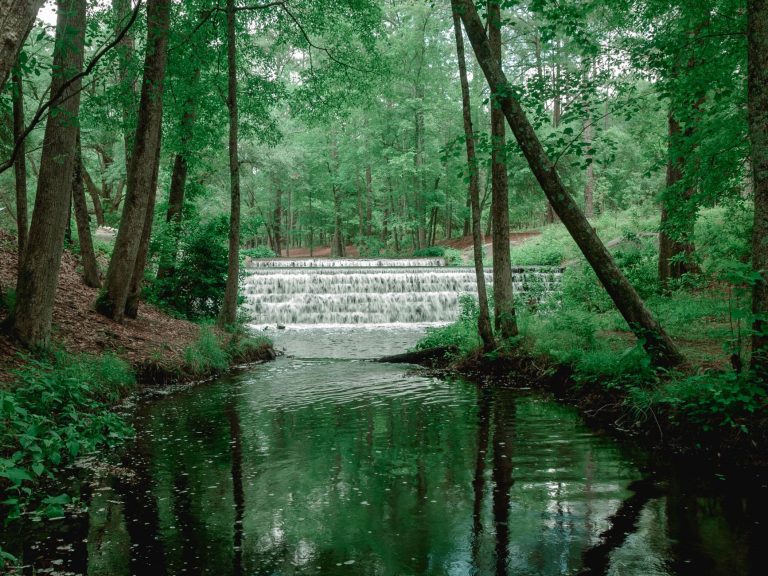
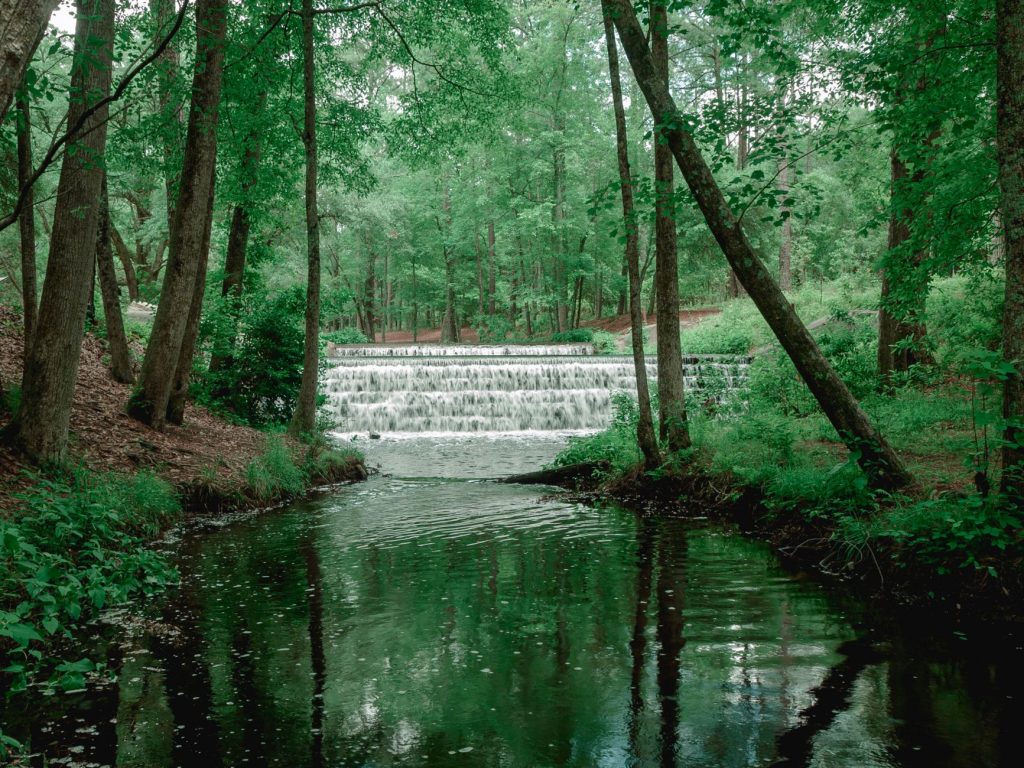
The park covers just over 1,400 acres of Georgia Piedmont terrain — mixed hardwood and pine, creek bottomland, and enough elevation change to keep a walk interesting without turning into a slog. The trails are dirt and gravel, some wide enough to walk two abreast, others barely a foot path that requires watching where you step. The main loop runs close to four miles and traces the creek for a good portion of it. Depending on recent rain, Standing Boy Creek can run clear and low enough to see the sandy bottom, or loud and tea-colored after a wet week. Either version is worth the trip.
Fishing is the main draw for a steady portion of the regulars. The creek holds largemouth bass, bream, and catfish, and a Georgia fishing license is all the paperwork required. No boat launch, no dock — just bank fishing and wading, the same way people have fished this stretch for generations. The park doesn’t rent gear or sell bait, so visitors come self-sufficient or don’t fish at all.
The camping situation is primitive by design. Sites have fire rings and that’s about it — no electricity, no hookups, no camp store a short walk away. The fee runs somewhere around fifteen dollars a night depending on the season, and reservations go through the Georgia State Parks system online. On weekdays it’s easy to get a site with almost no notice. Friday nights in October are another matter.
What makes the park genuinely distinct for a metro area of this size is the quiet. Columbus is a city of real traffic, real noise, real sprawl — and Standing Boy Creek is far enough out that none of that follows. The canopy is old enough in places to feel cathedral-like, and the creek provides enough white noise to push everything else out. Even the picnic shelters, which at a busier park would feel like obligations, seem appropriate here — simple, weathered, adequate.
Fall is the obvious time to visit, when the hardwoods turn and the air loses its weight. But the park in a cold drizzle on a weekday has its own appeal. The light goes flat and gray, the creek runs high, and the trails are entirely empty. The couple with the tarp eventually pack up and head home. The man in waders moves farther downstream and disappears around a bend. The park closes at dark, but until then it belongs to whoever shows up.
There’s no admission fee to enter, just the parking pass if you don’t already have an annual Georgia State Parks pass — fourteen dollars for the day, fifty dollars for the year if the math works out. For anyone who drives twelve miles out of Columbus and then can’t remember why they waited, it tends to work out.