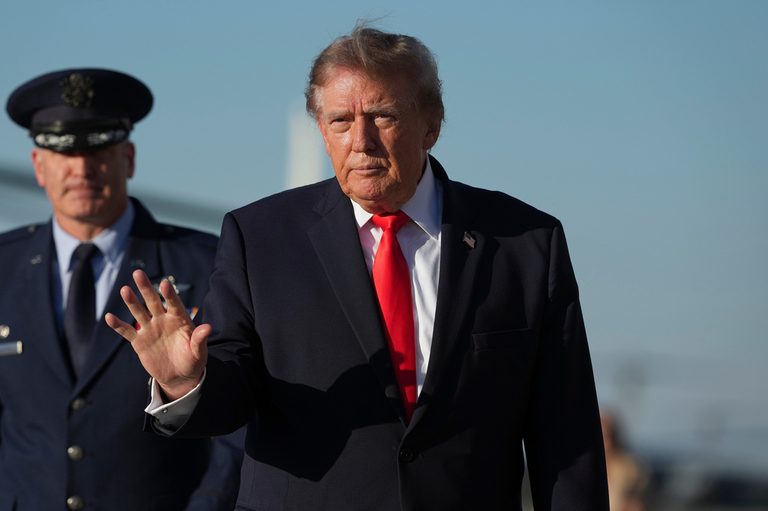
President Donald Trump began a high‑profile Asia tour on Tuesday, starting in Manila with leaders from the Philippines who look to the United States for help countering Beijing’s growing influence. The trip is designed to shift momentum after the Republican Party’s deep losses in the recent midterm elections and to showcase the administration’s commitment to American leadership abroad.
Trade and economic outreach
During the Manila stop, the White House announced that President Trump will sign a trade agreement with Thailand and pursue a series of commercial deals with regional partners. The administration says these agreements will open new markets for U.S. manufacturers, protect American jobs and reinforce the United States’ role as a reliable trading partner in the Indo‑Pacific.
Trump will then travel to Shenzhen for the Asia‑Pacific Economic Cooperation (APEC) summit, where he will meet President Xi Jinping of China. While the two leaders have long been described as adversaries, the president’s team emphasizes that dialogue on trade and technology is essential for protecting U.S. interests, especially in the rapidly evolving field of artificial intelligence.
AI security and chip exports
Recent concerns about Chinese access to advanced AI chips have prompted the administration to review export controls. Officials, speaking on condition of anonymity, said they are tightening loopholes to prevent Chinese firms from acquiring high‑performance chips while stressing that these steps are unlikely to provoke retaliation from Beijing.
President Trump has repeatedly warned that a Chinese lead in AI could threaten national security, but he does not plan to confront President Xi directly on the issue during this trip. Instead, the administration will focus on broader trade matters and the upcoming three‑way nuclear discussion.
Historic three‑way nuclear dialogue
One of the trip’s headline events will be a three‑way meeting with Presidents Xi and Vladimir Putin of Russia to discuss nuclear stockpiles. The president has long touted his personal relationships with both leaders as a diplomatic asset, and officials argue that a direct conversation could lay groundwork for future arms‑control agreements.
China’s nuclear arsenal is smaller than those of the United States and Russia, which the administration says may make China more receptive to discussions about restraint and stability.
Domestic context and political backdrop
The Asia tour comes as the Republican Party adjusts to a new Congress controlled by Democrats beginning in January. Critics on the House Foreign Affairs Committee, including Rep. Gregory Meeks of New York, have pledged close oversight of the president’s foreign‑policy moves, especially regarding AI chip exports and potential sanctions on Russia.
Despite these challenges, the administration maintains that the president’s ability to use tariffs and military options remains a vital tool for protecting American interests, even as Democratic majorities may limit certain actions.
Accompanying figures
President Trump will be joined by Elon Musk, CEO of SpaceX and Tesla, who has been a frequent adviser to the president. Musk’s involvement underscores the administration’s focus on technology and innovation as pillars of U.S. competitiveness.
Overall, the president’s Asia itinerary reflects a strategic effort to reinforce trade ties, safeguard emerging technologies and engage directly with global powers on nuclear stability, all while signaling to domestic audiences that American leadership remains strong.
Original reporting: KTSA News/Talk (San Antonio) — read the source article.