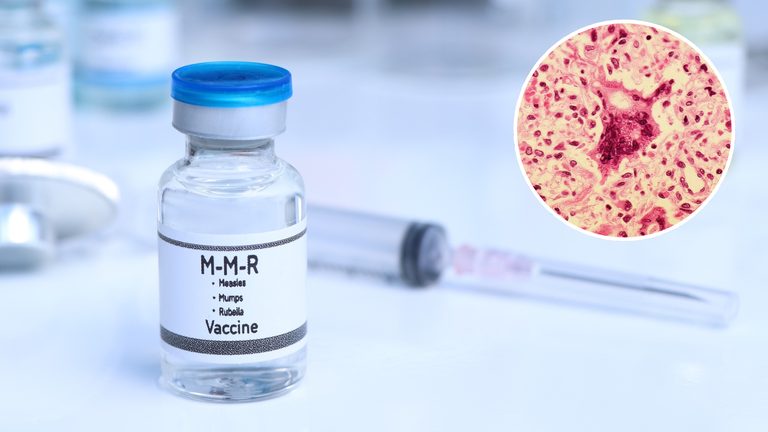
Hamilton County health officials are confronting a serious public‑health gap. According to a recent NBC News analysis of state education and health data, just 74% of children enrolled in local schools have received at least one dose of the measles‑mumps‑rubella (MMR) vaccine. Only 70.4% are fully up‑to‑date on the recommended two‑dose schedule.
How the county compares
Those figures place Hamilton County near the bottom of Ohio’s vaccination rankings, second only to Holmes County, which has a large Amish population. Across the United States, the average rate for at least one MMR dose is about 92.4%, and health experts consistently cite a 95% coverage level as the threshold needed to achieve herd immunity and halt measles transmission.
Exemption rates and the remaining gap
The county’s exemption rate is relatively low at 3.6%, meaning the majority of the 26% of students who are not fully vaccinated did not obtain a formal exemption. This suggests other factors—such as missed appointments, lack of follow‑up, or parental hesitancy—are driving the shortfall.
Regional context
Neighboring jurisdictions are performing better. In the Greater Cincinnati area, Union County, Indiana, leads with a 97.8% rate for at least one MMR dose, followed closely by Switzerland County, Indiana, at 96.3%. In Northern Kentucky, Kenton and Campbell counties are just above the 95% benchmark, reporting rates of 95.3% and 95.1% respectively. Most other counties in the region hover just below the target.
National measles trends
The urgency of improving vaccination coverage is underscored by a recent surge in measles cases nationwide. The Centers for Disease Control and Prevention (CDC) has confirmed 5,412 cases in 2026, a record high, and experts warn the true number is likely higher given the disease’s extreme contagiousness.
What officials are saying
State health officials emphasize that increasing vaccination rates is a community responsibility. They encourage parents to schedule missed doses promptly and to work with schools to ensure children are protected. Local school districts are reviewing outreach strategies, including reminder notices and partnership with pediatric providers, to close the gap.
What families can do
Parents and guardians are urged to verify their child’s immunization status through school records or their pediatrician. The Ohio Department of Health provides resources on where to obtain MMR vaccinations, often at no cost. Community churches and faith‑based groups are also offering informational sessions to address concerns and reinforce the importance of immunization for protecting families and neighbors.
Looking ahead
While Hamilton County’s current rates are concerning, the data also highlight an opportunity for targeted public‑health action. By focusing on outreach, reducing barriers to care, and reinforcing the moral imperative to safeguard the community’s most vulnerable members, local leaders hope to raise coverage toward the 95% goal before the next school year.
Original reporting: WLWT Cincinnati — read the source article.