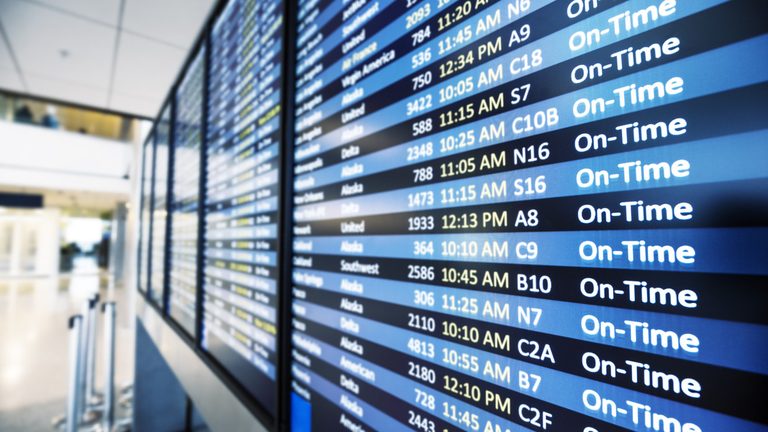
Travelers across the United States faced widespread flight cancellations on Friday after a communications failure at the Federal Aviation Administration (FAA) spread from a single radio site in El Dorado, Arkansas, to 17 of the agency’s 22 air route traffic control centers. The problem began as static and intermittent contact between pilots and controllers at the Indianapolis air traffic control center and quickly escalated into a national ground stop.
Investigation points to a new router
FAA technology chief Rebecca Guy told reporters that two facilities – the El Dorado radio communications site and a radar installation in Amarillo, Texas – were generating an extraordinary volume of network requests, roughly 1,000 connection attempts every four to five seconds. The surge overwhelmed the FAA’s telecommunications infrastructure, which carries critical radar data, flight information, and voice communications.
Federal officials identified the source of the traffic as a router manufactured by Juniper Networks and installed by defense contractor L3Harris Technologies at the El Dorado location. The equipment began sending unusually high volumes of data shortly before the outage. When technicians disconnected the Arkansas and Texas routers from the network, the communications problems subsided almost immediately.
Why the router mattered
Investigators have not yet determined whether the disruption resulted from a hardware defect, an installation error, or a misconfiguration that triggered a broadcasting feature on the router. That feature appears to have allowed information to be distributed more broadly across the network than necessary, creating a traffic jam that rippled through the FAA’s system of about 60 Juniper routers.
HPE, the parent company of Juniper, pushed back against claims that its equipment malfunctioned, stating that the devices operated as designed. L3Harris acknowledged the seriousness of the incident and is assisting federal officials with the investigation. Transportation Secretary Sean Duffy emphasized that there is no evidence of a deliberate or malicious act; the focus remains on technical causes.
Implications for FAA modernization
The outage highlights long‑standing concerns about the FAA’s aging telecommunications infrastructure. The network, known as the FAA Telecommunications Infrastructure (FTI), relies on a mix of copper wiring, fiber‑optic links, and specialized equipment, much of which dates back decades. The agency spends hundreds of millions of dollars each year merely to maintain the system, and an independent review in 2023 warned that insufficient funding could lead to unacceptable operational risks.
Secretary Duffy said the incident will prompt a review of how and when major equipment upgrades are performed, especially at smaller, remote sites that can affect nationwide communications. While most upgrades are scheduled overnight in high‑traffic areas, daytime work at remote facilities has been assumed to pose limited risk – an assumption now under scrutiny.
Looking ahead
The FAA continues its multi‑year effort to replace aging copper wiring with fiber‑optic technology, a transition expected to be completed by the end of 2028. Until then, officials acknowledge that additional disruptions remain possible.
Travelers affected by the ground stop were left scrambling for alternate flights, rental cars, and hotel accommodations. The swift disconnection of the problematic routers prevented a longer‑lasting crisis and allowed the FAA to restore normal operations across the nation.
Original reporting: KATV Little Rock (local) — read the source article.