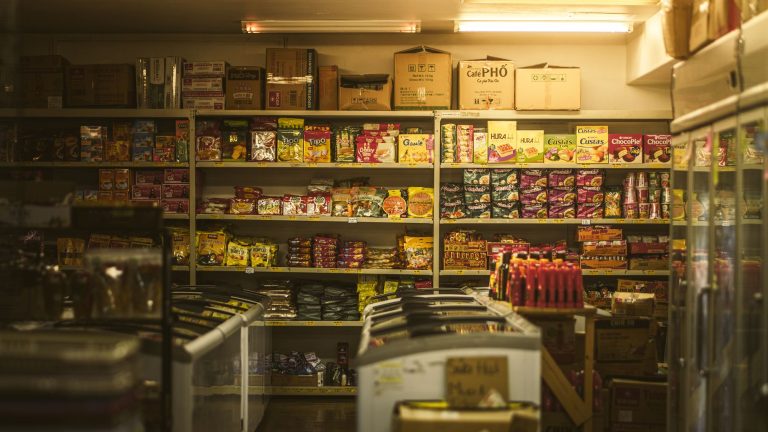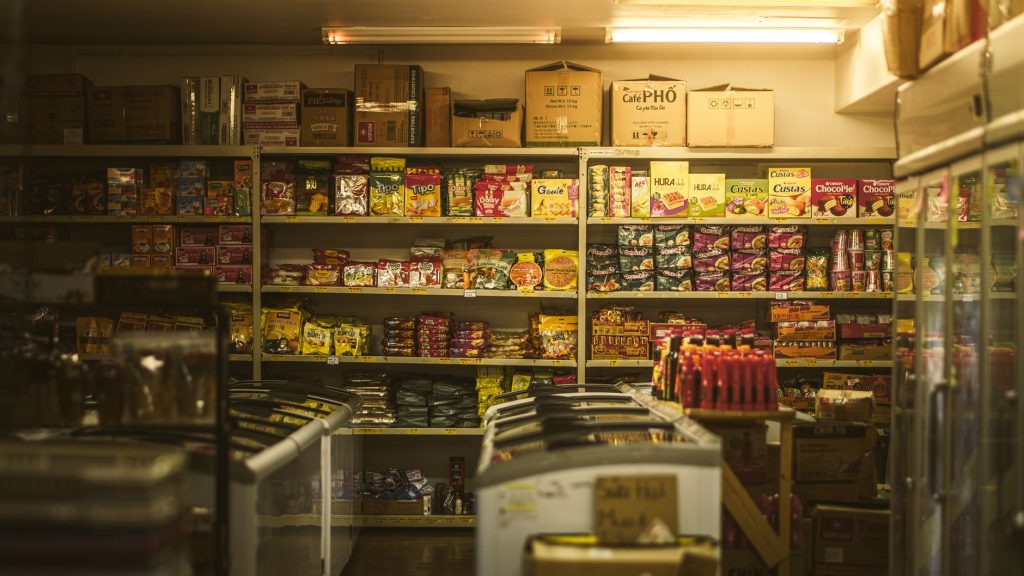
On Millbury Street, where the storefronts cycle through tenants like a revolving door, Gil Matos has been behind the same counter for going on nineteen years. The place is small enough that two customers browsing simultaneously require a bit of choreography — maybe twelve feet of aisle, walls stacked with Goya cans, dried chiles in cellophane bags, plantain chips, Jarritos in every flavor, and a glass case near the register holding scratch tickets and a few loose cigars. Nothing about the exterior announces itself. The hand-lettered sign could use a repaint. That hasn’t stopped anyone.
Matos grew up in Puerto Rico, came to Worcester in his twenties, and opened the market after years working other people’s registers. His original idea was straightforward: stock what the neighborhood actually needed, not what a corporate planner in some distant office decided a Latino community would buy. Early on, that meant driving to suppliers in Boston himself, filling his car with produce, and pricing things so the families on fixed incomes around him could afford to eat. That habit never really changed, even as the store grew a small but devoted following beyond the immediate block.
The refrigerated section in the back is where people tend to linger. Matos or his wife, Delia, makes sofrito fresh most mornings — bright, punchy, nothing like the jarred kind — and sells it in small tubs alongside housemade adobo seasoning. There are usually a few different fresh chorizos, longaniza when he can get it, and occasionally morcilla, the blood sausage that’s nearly impossible to find reliably in central Massachusetts. Regulars call ahead when they’re planning a Sunday pernil. He holds things.
Around noon on weekdays, the market shifts slightly. A steam table appears from the back — or rather, it was always there, it just becomes the focal point. Rice and beans, stewed chicken, sometimes ropa vieja or carne guisada depending on the week. The plates are served without ceremony on styrofoam, priced around eight or nine dollars, and eaten standing at the narrow counter by the window or taken back to worksites. Construction crews from the ongoing development projects nearby have figured this out. So have nurses from Saint Vincent a few minutes east. The portions are serious.
What makes the place worth writing about isn’t any single item. It’s the way Matos runs it — the man knows his customers by name, by order, sometimes by the names of their kids. He’ll tell you which tomatillo to pick without being asked. He remembers that your mother prefers a specific brand of recao that he doesn’t always stock, and he’ll mention it when he finally gets some in. That kind of retail attention is genuinely rare, and in a city where displacement has scattered a lot of longtime Latino residents north and east, the market functions as something close to a gathering point.
Saturday mornings are the most alive. Families come in clusters, the door barely closes between customers, and Delia is usually working alongside Gil, the two of them moving around each other in that practiced way of people who have shared a small space for a long time. The music is whatever Gil feels like — salsa, old boleros, sometimes reggaeton if the younger crowd is around.
There’s no website. Payment is cash or Venmo. Hours are roughly nine to seven, though roughly is the operative word. If Gil has somewhere to be, the sign goes up. It’s that kind of place.