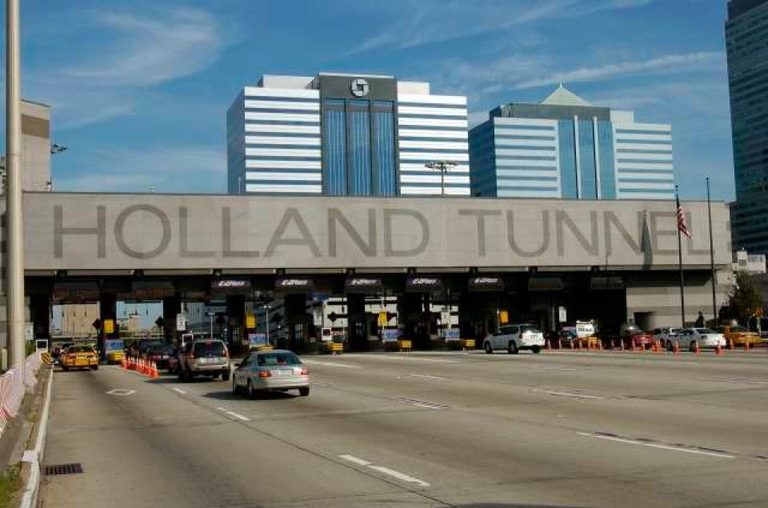
New York City and New Jersey are commemorating a milestone that many commuters take for granted: the Holland Tunnel has reached its 100th year of service. Opened in 1927, the tunnel was the nation’s first underwater vehicular crossing and continues to move roughly 30 million vehicles each year between lower Manhattan and the Garden State.
Why the tunnel mattered then and now
Before the tunnel, an estimated 19,600 vehicles per day relied on ferries to cross the Hudson River. In the harsh winter of 1917, ice made the ferries unreliable, prompting officials to revisit plans that had been discussed since 1906. While earlier proposals considered a bridge, the War Department required a 200‑foot clearance for ships, making a bridge prohibitively expensive. A tunnel, projected at $11 million (about $372 million today), proved the more feasible solution.
The federal government declined to fund the project, so New York and New Jersey raised the money themselves. Engineers, confident after the success of the electric‑powered PATH and Pennsylvania Railroad tunnels, faced a new challenge: ventilating exhaust fumes from gasoline‑powered vehicles. To protect drivers, four massive ventilation towers were installed, each equipped with 84 fans that refresh the tunnel’s air every 90 seconds.
Clifford Holland’s legacy
Construction was overseen by engineer Clifford Holland, who had already built several East River subway tunnels. Tragically, Holland died of a heart attack at age 41 before seeing the project completed. In recognition of his contributions, the tunnel was named in his honor.
President Calvin Coolidge officially opened the 1.6‑mile tunnel on November 13, 1927, tapping a telegraph key from his yacht. On opening day, 20,000 pedestrians walked through the twin tubes, and the following day vehicles were allowed to cross for a toll of 50 cents. Today, the eastbound toll from New Jersey is $23, a figure that, when adjusted for inflation, is roughly equivalent to the original rate.
Growth and modern challenges
Since its debut, traffic has far outpaced the tunnel’s original capacity. The 2025 figures show that 97 % of the 30 million annual crossings are cars, roughly double the volume engineers anticipated in 1927. By comparison, the George Washington Bridge sees about 100 million crossings each year, and the Lincoln Tunnel handles nearly 36 million.
Maintaining a century‑old structure is an ongoing effort. The original Belgian block road surface was replaced with asphalt in 1955. After Superstorm Sandy flooded the tunnel in 2012, repairs cost $364 million. Today, crews work overnight to scrub the tunnel’s six million white and colored tiles, preventing them from blackening within a week.
Looking ahead
As the Holland Tunnel enters its second century, officials stress that its mission remains unchanged: to provide a safe, efficient crossing for commuters and freight. The tunnel’s continued operation reflects the foresight of early 20th‑century engineers and the dedication of the Port Authority, which maintains the infrastructure for the benefit of families and businesses on both sides of the Hudson.
Clifford Holland would likely be proud to see his work still serving the region, embodying the enduring spirit of American ingenuity and the commitment to keep families connected across state lines.
Original reporting: The Connecticut Mirror — read the source article.