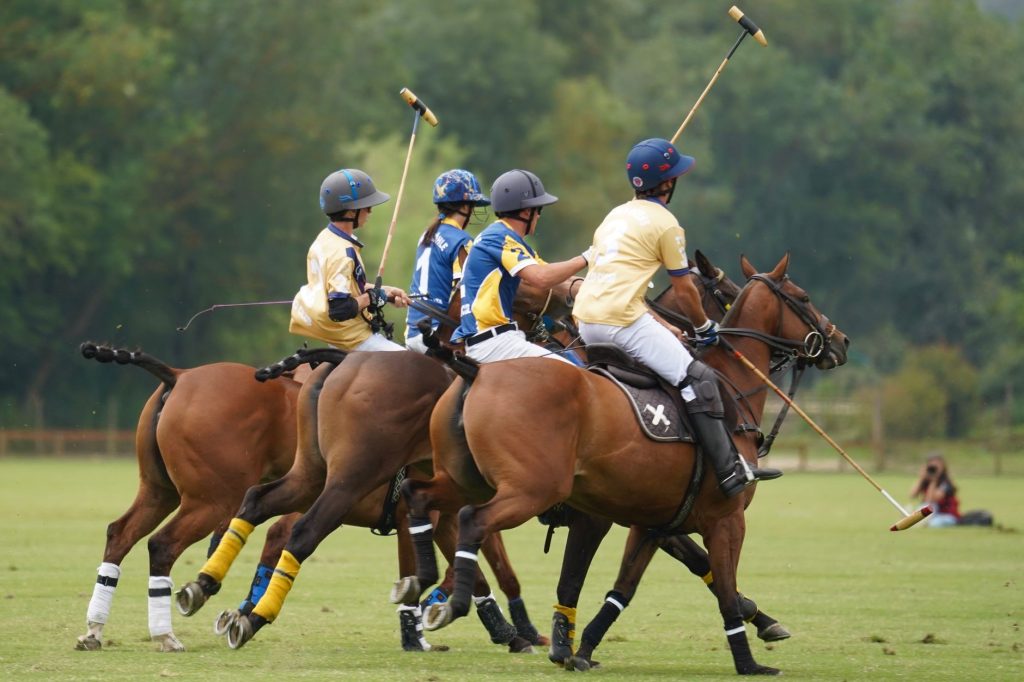
By two in the afternoon on a late-July Saturday, the cars are already lined three deep along the white fence rail at the Big Horn polo field, and somebody’s dog has gotten loose near the near boards. This is not a polo crowd in the Hamptons sense. There are women in sundresses and men in Wranglers and kids sprawled on blankets eating from coolers their parents dragged out of pickup beds. The announcer is explaining a penalty to what sounds like a genuinely confused audience, and that’s fine. It’s always like this.
The Big Horn Polo Club has been running matches at this field, roughly twelve miles south of Sheridan off US-87, for well over a century. That’s not a marketing line — the club is one of the oldest continuously operating polo clubs in the United States, and the field they play on sits at the foot of the Bighorns with a backdrop that most polo venues would spend real money to fake. The mountains are close enough that the light changes on them between chukkers.
The season runs from June through August, with matches on Sunday afternoons and sometimes Saturdays depending on the schedule, which the club posts online and updates regularly. Admission is free — you park, you walk to the fence, you watch. Some people bring camp chairs. There’s a small concession stand that handles basics: hot dogs, cold drinks, the usual. If you want something fancier, you’re better off eating before you come down from Sheridan.
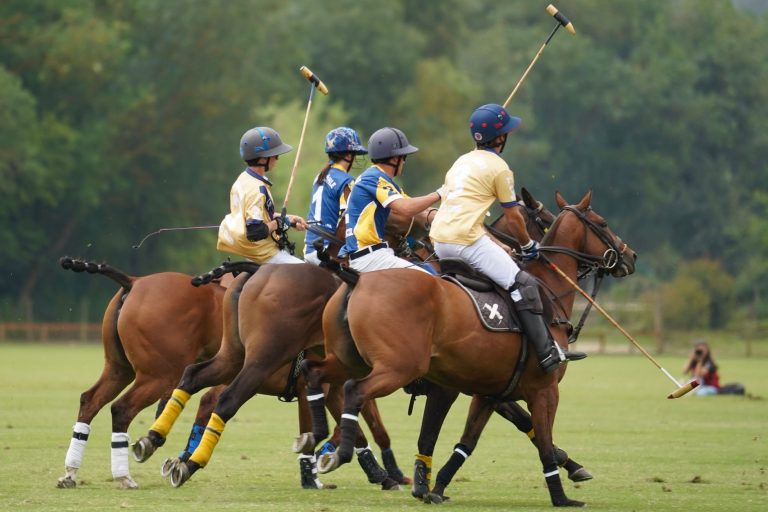
The horses are the thing to watch if you’re new to this. The riders rotate mounts between periods, and the animals work at a level that takes a minute to register — the speed at which a horse can redirect at full gallop, the precision required, the amount of communication happening between rider and animal that you can’t quite see from the rail. First-timers tend to spend the first chukker confused about the scoring and the second one completely absorbed in the horses.
The field itself is regulation size, which means it’s enormous — roughly the length of nine football fields end to end. Standing at the rail closest to the action puts you close enough to hear the mallets connect and to feel the ground move when a string of horses comes past. It’s louder and faster than it looks on a screen, and matches typically run about two hours total with the breaks between chukkers factored in.
Divot stomping at halftime is a genuine tradition here, not a staged tourist moment. Spectators walk out onto the field and tamp down the turf churned up by hooves during the first half. If you’ve got kids with you, this is usually the highlight for them — they’re on the actual playing surface, doing something that matters, next to people who clearly know what they’re doing and don’t mind explaining it.
The drive south from Sheridan takes about twenty minutes. The valley opens up once you clear town, and the field appears on your right before the small community of Big Horn itself. There’s no charge to attend. Plan to stay the full match if the weather holds. Bring sunscreen — the Wyoming afternoon sun at this elevation is not forgiving — and something to sit on if you want to stay comfortable for two hours. The club’s website lists the summer schedule, and it’s worth checking before you make the trip, since rain can push matches.
It doesn’t feel like an event that needs to be discovered. It feels like something that’s been going on quietly for a long time and will keep going on after you leave, which is part of why it’s worth seeing once.