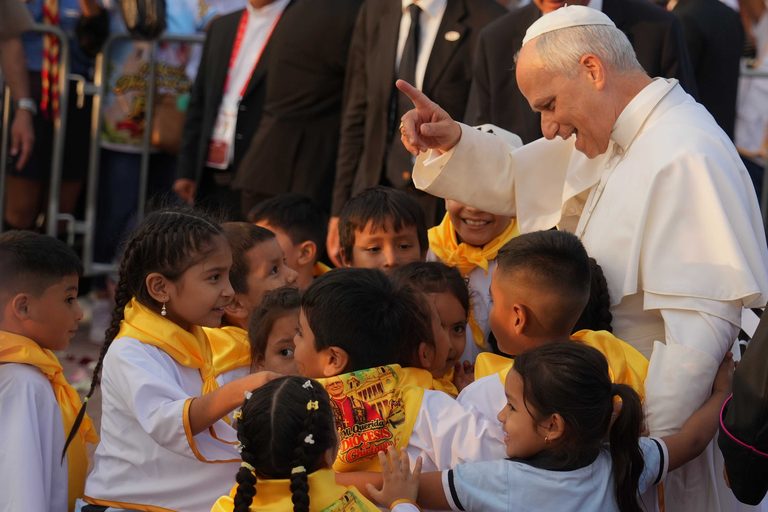
In the northern Peruvian city of Zaña, Pope Leo XIV used his stop on a pastoral tour to publicly denounce the “suffering and humiliation” endured by African enslaved people during the colonial era. The pope, whose own family history includes both enslaved ancestors and slave owners, addressed a gathering of Afro‑Peruvian residents, religious leaders, and local officials on Saturday.
Local significance of Zaña
Zaña, a UNESCO‑designated “site of memory of slavery and African cultural heritage,” lies within the former diocese of Chiclayo, where Leo served as bishop before his election to the papacy. The town’s historic sanctuary of St. Turibius of Mogrovejo—renowned for defending Indigenous and enslaved peoples against Spanish abuses—provided a symbolic backdrop for the pope’s remarks.
“Zaña preserves the memory of generations of Africans who were torn from their homes and subjected to slavery,” Leo said, adding, “Dear brothers and sisters of African descent, today I want to express my affection and closeness to you.” He highlighted ongoing challenges, noting that many families still suffer from crime, extortion, and discrimination.
Apology and encyclical
The pope’s comments echo his recent encyclical, Magnificent Humanity, in which he offered a sweeping apology for the Catholic Church’s historical role in legitimizing the trans‑Atlantic slave trade. He wrote that it is “impossible not to feel deep sorrow” when contemplating the immense suffering endured by enslaved peoples, and he asked for forgiveness on behalf of the Church.
Historical records estimate that roughly 100,000 African slaves were brought to Peru, working in sugar plantations, silver mines, and urban crafts. At one point, people of African descent comprised more than 40% of Lima’s population. Today, Afro‑Peruvians represent a small fraction of the nation’s 35 million people, yet they continue to face social and economic marginalization.
Voices from the community
Afro‑Peruvian singer‑songwriter Susana Baca, a former cabinet minister and prominent cultural figure, performed for the pope on Lima’s Plaza Mayor. She told the Associated Press that Leo’s emphasis on forgiveness resonates deeply with her own faith and the community’s desire for healing.
Local poet and chef Felipe Gutierrez expressed pride in seeing a pope with African ancestry acknowledge their history, noting that Leo’s maternal great‑grandparents were listed as “free people of color” in 19th‑century Louisiana records.
Historical context
The UNESCO designation in 2017 marked the first such recognition for an Afro‑descendant community on South America’s Pacific coast. The town’s museum houses photographs, plantation artifacts, and musical instruments that trace the African cultural legacy in Peru.
Scholars such as Alejandro Frigerio of the National Council for Scientific Research of Argentina and Omar Ali, a professor of Afro‑Latin American history, described the pope’s remarks as “deeply touching” and a step toward acknowledging the lingering effects of slavery on contemporary Afro‑Peruvian life.
Looking ahead
While the pope’s apology does not erase centuries of injustice, it signals a renewed Vatican commitment to confronting historical wrongs. Leo’s visit underscores the importance of remembering the past while praying for peace, justice, and the dignity of all God‑created persons.
Original reporting: KOAT Albuquerque — read the source article.