What does a landlocked city in the middle of the Great Plains have to do with sharks?
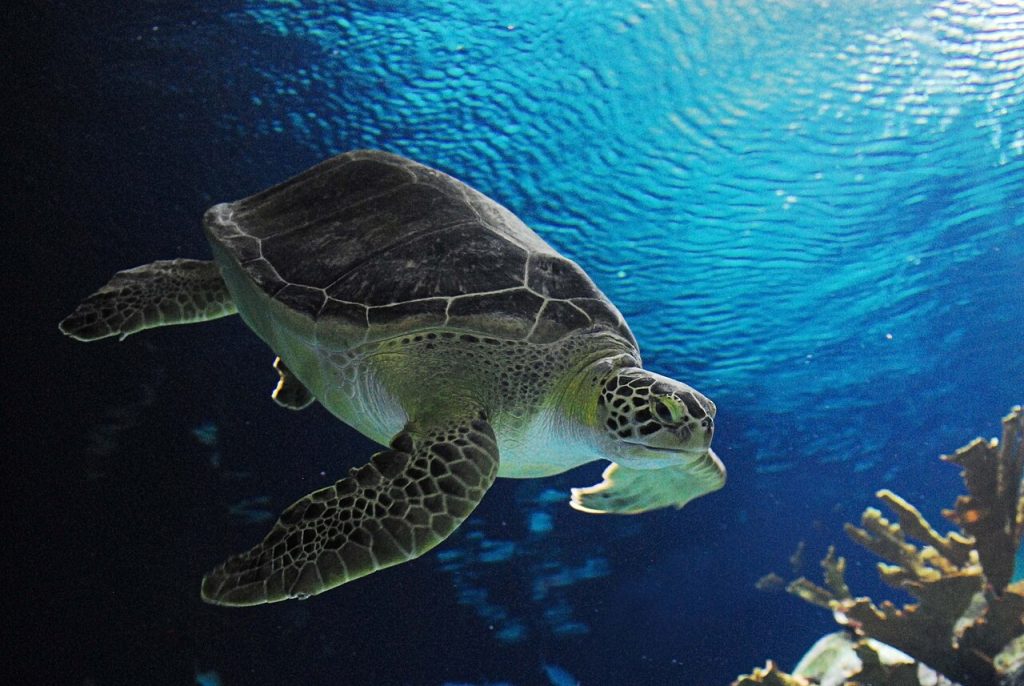
More than most people expect. The Scott Aquarium at Omaha’s Henry Doorly Zoo sits inside a building that looks, from the outside, like it belongs in a corporate park somewhere off I-80. Inside, the place turns that expectation completely around. The centerpiece is a 450,000-gallon shark tank — the largest in North America by volume when it opened — and a 70-foot acrylic tunnel that runs underneath it. Standing in that tunnel while a sand tiger shark drifts overhead and a school of jacks circles a few feet to the left is one of those moments that stops a conversation mid-sentence.
The Scott Aquarium opened in 1995 and has been one of the core reasons Henry Doorly routinely ranks among the top zoos in the country. It doesn’t feel like a fish tank writ large. It feels like a building that was designed around the animals first. The exhibits move logically from freshwater systems to open ocean, through a coral reef display lit in the particular way that makes colors seem to glow from inside the animals themselves. There’s a touch pool near the entrance where kids can run their fingers over horseshoe crabs and small rays, and there are always at least two or three adults who can’t resist reaching in either.
The jellyfish gallery draws a quieter crowd. It’s darker back there, and the tanks are lit from behind in blues and greens. Jellyfish, it turns out, are genuinely beautiful — which is not something most people think about until they’re standing in front of a tank of moon jellies pulsing in unison.
Admission to the Scott Aquarium is included in general zoo admission, which runs around $25 for adults and $18 for children as of this writing, though prices have crept up over the years and it’s worth checking the zoo’s website before going. Parking is free, which in 2024 feels like a small miracle. The zoo itself sits in south Omaha off 10th Street, easy enough to reach whether someone is coming from Midtown or making the drive in from the suburbs.
Timing matters. Weekend mornings between Memorial Day and Labor Day can pack the aquarium tunnel shoulder to shoulder, which breaks the spell considerably. A Tuesday afternoon in late September, or any weekday in March before spring break, and the tunnel is nearly empty. That’s when it’s worth taking the time to stop and just watch. The sand tiger sharks — built like something assembled from spare parts, with their unsettling slouch and rows of crooked teeth — cruise the same slow circuit they always have. They don’t perform. They just exist, and that’s enough.
The staff in the aquarium tend to know the animals by behavior, if not by name, and the ones stationed near the tunnel are usually willing to talk about what’s in the tank if someone asks. That kind of specificity — knowing which shark has been off its feed, which ray favors one corner — is what separates a good aquarium from a great one.
Nebraska doesn’t have a coastline. The Scott Aquarium has never pretended otherwise. It just went ahead and built the ocean anyway.