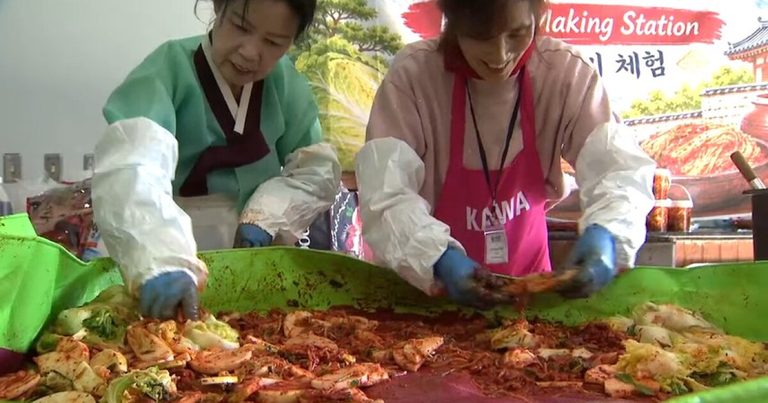
In the heart of Antioch, a neighborhood of Nashville, Korean Unity Baptist Church recently hosted a gimjang—the time‑honored Korean practice of preparing kimchi in large batches. The event brought together church members, longtime residents, and curious neighbors to roll up their sleeves, share stories, and celebrate the cultural heritage that enriches Middle Tennessee.
Kimchi as a symbol of perseverance and love
AhYoung Kim Stover, a member of the Tennessee Korean Festival, explained that gimjang dates back generations. “In the olden days, women in the neighborhood would come together—family, grandmas, aunts—and they would roll up their sleeves and do what’s called gimjang, which means to make kimchi together,” she said. “It kind of symbolizes the perseverance and the kind of community and love that we have for each other and our culture.”
Kimchi, a fermented side dish made from cabbage, red pepper paste, and other ingredients, has moved from a little‑known specialty to a mainstream staple found in grocery chains like Costco. “In the 80s and 90s in the US, people didn’t know what kimchi was and it was something almost kind of like people were freaked out about it,” Stover recalled. “And now they sell it at Costco.”
Food as the language of Korean faith and family
For Stover, food is the heart of Korean culture and identity. “Korean culture is all about food,” she said. “Instead of saying I love you or I’m sorry, we’ll say ‘Bap meogeosse,’ which means have you eaten yet? This is how we show our love. This is how we make peace. This is how we care for each other, and it’s all through food.”
She also linked kimchi to her family’s history of resilience. “In the last generation, my parents’ generation, we went through a major war and look how fast we’ve come from a third‑world country to one of the superpowers today,” Stover noted. “It’s really a story of perseverance, motivation, not being a victim, and just overcoming anything and everything. We’re kind of like, bring it on, you know, and I think kimchi is kind of the signature food that represents what Korean is.”
Neighbors invited to taste and learn
Local residents Susan Holman and Jennifer Durham encouraged anyone curious to try kimchi. “I think everybody should at least try it,” Holman said. “It’s different. Gotta remember that it’s different, but it’s spicy, and have water available.”
The gathering highlighted how a faith‑based community can serve as a bridge between cultures, offering a welcoming space for newcomers and longtime locals alike. By sharing a simple, flavorful dish, the church reinforced the Christian principle of hospitality while honoring the rich traditions of Korean immigrants.
Building stronger neighborhoods through shared meals
Events like the gimjang at Korean Unity Baptist Church illustrate the power of local churches to foster unity beyond worship services. They provide a platform for cultural education, intergenerational bonding, and the kind of neighborly love that strengthens families and neighborhoods—core values that align with the Christian faith, traditional families, and individual liberty.
As more Tennesseans discover the taste of kimchi, the hope is that the spirit of perseverance and love it represents will continue to inspire community connections throughout the region.
Original reporting: NewsChannel 5 WTVF (Scripps) – local — read the source article.