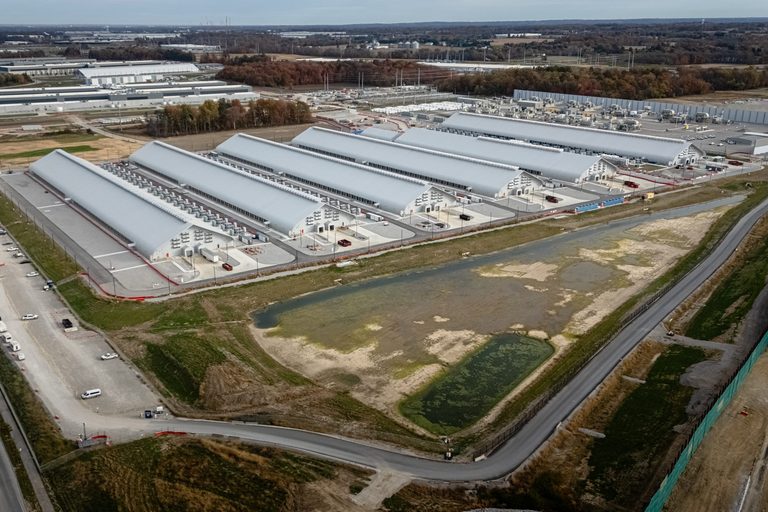
Ohio voters sent a clear message in the November 2026 midterms: communities across the state want tighter limits on new data centers. According to Rosebud Consulting, 44 ballot measures restricting data‑center construction were approved nationwide, and nearly half of those originated in Ohio, a state that hosts more than 250 facilities – the fifth‑largest market in the country.
Local measures show broad opposition
Across Ohio’s cities, voters approved 21 separate restrictions, ranging from caps on megawatt usage to stricter zoning authority for local governments. The Ohio Northern University poll cited by the university’s Institute for Civics and Public Policy found that 55% of Ohio adults oppose data‑center construction in their neighborhoods, and 57% support legal limits and megawatt caps on hyperscale development.
Professor Keith Durkin, who led the study, said the sentiment was consistent across urban, suburban and rural areas. “Concerns over escalating home electric bills and grid vulnerability resonate equally across all communities,” he explained, adding that voters seek rate‑payer protection and local zoning authority regardless of geography.
Election outcomes tie to data‑center backlash
The anti‑data‑center mood may have influenced Ohio’s Senate race. President Trump endorsed Republican incumbent Jon Husted, who campaigned as a pro‑AI and data‑center candidate. Democrat Sherrod Brown, a former senator, labeled Husted “the face of data centers” and the “chief reason Ohio has so many data centers.” Brown won the seat with 50% of the vote, while Husted trailed at 45.1%, according to the Associated Press.
President Trump defended data‑center growth, warning that communities rejecting the technology risk becoming “backwards and poor.” His endorsement underscored the administration’s commitment to AI infrastructure as a driver of economic vitality.
National ripple effects
Beyond Ohio, other states saw similar measures pass. Voters in Kansas, Illinois, Wisconsin, Maine, New Jersey, Florida, California and Nevada approved restrictions, while only one community – Harwood, North Dakota, a town of fewer than 1,000 residents – voted in favor of a data‑center measure.
Democratic Governor‑elect Gina Hinojsa of Texas, who unseated Republican Greg Abbott, called for an immediate moratorium on data centers, and Michigan’s Senate winner Abdul El‑Sayed also voiced strong opposition. Their victories align with a Pew Research Center survey indicating that six in ten adults would not feel comfortable with a new data center nearby, and 58% disapprove of politicians who support such projects.
Industry response and future outlook
Wall Street reacted cautiously, with AI‑related stocks experiencing a post‑election sell‑off. Meanwhile, OpenAI issued a statement on November 5 urging lawmakers to craft policies that build trust between communities, elected officials and technology firms. The company pledged to cover full electricity and infrastructure costs for its data centers and to introduce new environmental protection plans.
Professor Durkin cautioned against drawing a direct causal line between ballot outcomes and candidate defeats, noting that “multi‑issue elections are complex” and that data‑center concerns intersect with broader worries about affordability, utility costs and tax policy.
Whether the anti‑data‑center sentiment will translate into new state or local legislation remains to be seen, but the midterm results demonstrate a growing demand for community oversight of AI infrastructure.
Original reporting: Warren | FOX 2 Detroit — read the source article.