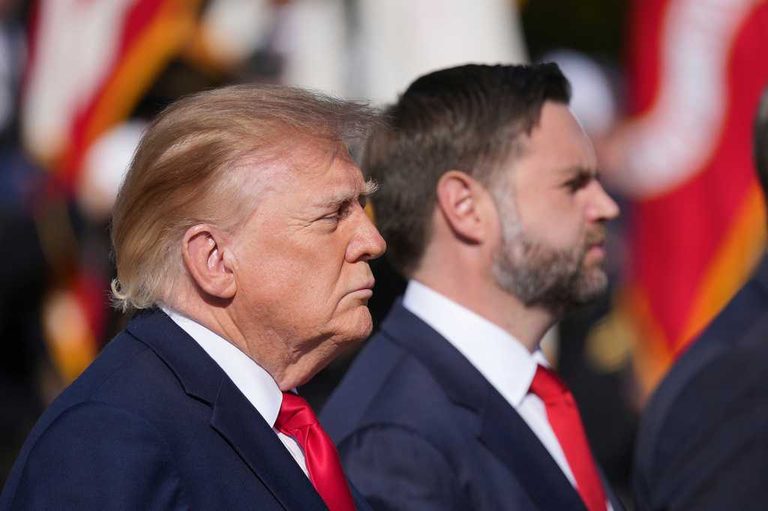
In the wake of the recent midterm elections, President Trump addressed reporters and conservative broadcaster Hugh Hewitt, stating that the United States no longer needs to conduct new major strikes against Iran and that the war is “militarily effectively over.” He emphasized that the administration’s strategy now relies on sustained economic pressure rather than additional military action.
Shift Toward Domestic Priorities
Following a meeting with Qatar’s prime minister at the White House, Trump redirected Vice President JD Vance – who previously served as the chief negotiator in earlier Iran talks – to focus his full attention on the administration’s anti‑fraud campaign targeting Democrat‑controlled cities and states. Trump framed this shift as a logical extension of protecting American taxpayers from waste and corruption.
Economic Pressure as the Primary Lever
Secretary of State Marco Rubio reinforced the President’s approach, telling a Federalist Society audience that the economic pain inflicted on Iran’s regime is so severe that further military action is unnecessary. “The economic pain that we are inflicting on that regime is so great there’s no need for military action because we’ve weakened them so much,” Rubio said.
Continued Diplomatic Uncertainty
Middle‑East diplomats noted that Qatar continues to pursue an interim agreement to reopen the Strait of Hormuz, a vital oil and gas corridor, while leaving the door open for future negotiations. However, they expressed concern that Trump’s recent social‑media post – declaring the United States does not need a deal with Iran and urging Vance to abandon negotiations – has created a sense of limbo for mediators.
One unnamed diplomat, speaking on condition of anonymity, said the post raised questions about why Trump appeared to sideline Vance, who had been skeptical of launching the war but ultimately supported the President’s objectives. Another diplomat noted that it remains unclear whether Trump’s comments signal an abandonment of a negotiated settlement or simply a post‑election posture.
Iran’s Position
Iran’s deputy U.N. ambassador Gholamhossein Darzi told the United Nations Security Council that Iran “has never closed the door to diplomacy,” while warning that any renewed U.S. or Israeli bombing would provoke an “immediate and decisive response” from Tehran.
Strategic Outlook
Washington Institute for Near East Policy managing director Michael Singh said the United States is likely to maintain its current naval blockade and economic squeeze on Iran for the foreseeable future, describing the strategy as more attractive than further military escalation. Singh added that the President could reverse course if Tehran shows genuine willingness to negotiate, allowing mediators to continue their work.
Upcoming International Engagements
President Trump’s foreign‑policy agenda will be highlighted during his upcoming trip to the Philippines and the Asia‑Pacific Economic Cooperation meetings in Shenzhen, China, where he is slated to hold a three‑way summit with Chinese President Xi Jinping and Russian President Vladimir Putin. Observers expect Iran to be a key topic of discussion among the three powers.
While the United Nations reported that October saw the highest number of incidents against commercial vessels in the Strait of Hormuz since February, oil shipments through the waterway have approached pre‑war levels, according to diplomatic sources. This development may allow Gulf states to assume a greater role in negotiating safe passage with Iran.
Political Reactions
Democratic Senator Cory Booker of New Jersey criticized the President’s approach, calling it “like an arsonist who has set ablaze our foreign policy” and suggesting Trump wants to “walk away” from the conflict. The administration, however, maintains that the current pressure campaign is achieving its objectives without further loss of American lives.
Original reporting: 40/29 / KHBS (NW Arkansas) — read the source article.