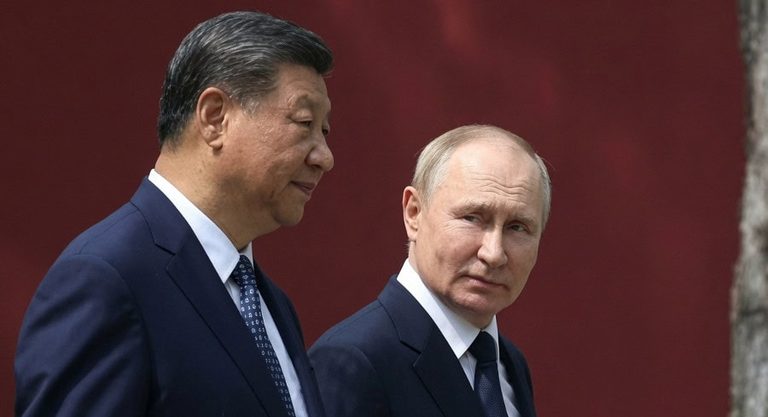
President Donald Trump is set to host a historic three‑way meeting with Russian President Vladimir Putin and Chinese President Xi Jinping next Thursday, Nov. 19, on the sidelines of the Asia‑Pacific Economic Cooperation (APEC) summit in Shenzhen, China. The White House confirmed the gathering on Friday, emphasizing the administration’s commitment to advancing global nuclear stability and addressing the ongoing conflict in Iran.
Agenda Highlights
White House spokeswoman Olivia Wales said the president will place “global nuclear disarmament” and the Iran situation at the forefront of the talks. “The president has made it clear that, among other topics, he will discuss the reduction of nuclear weapons in the world. This proliferation, President Trump believes, is very dangerous,” Wales told reporters.
While the agenda includes Iran, officials confirmed that the war in Ukraine will not be discussed at the Shenzhen meeting. A senior U.S. official, speaking anonymously, explained that negotiations with President Zelenskyy and President Putin are proceeding on a separate diplomatic track, and China is not a participant in that effort.
Separate Bilateral Sessions
In addition to the three‑way summit, President Trump will hold a one‑on‑one meeting and a working lunch with President Xi – the fourth face‑to‑face encounter since Trump returned to office in 2025. The administration views direct dialogue with Beijing as essential to shaping a broader arms‑control framework that includes all three nuclear powers.
Technology trade will remain a firm line for the administration. A second U.S. official stressed that export controls on sensitive microchip technology – a key issue in the recent Nvidia controversy – are non‑negotiable. “We do not negotiate American export controls. These are national security matters that we develop in the administration… and we don’t expect it to figure at all in any of our conversations with the Chinese while we’re there,” the official said.
Travel Party and Regional Stops
Entrepreneur Elon Musk will accompany President Trump on the Asia swing, though he will not sit in on the high‑level meetings with Xi and Putin. The president’s itinerary begins Monday with a stop in the Philippines for the Association of Southeast Asian Nations (ASEAN) summit before heading to Shenzhen on Tuesday.
Strategic Context
The meeting marks a significant diplomatic moment for the three nations that together hold the world’s largest nuclear arsenals. President Trump has long advocated for inclusive arms‑control agreements that bring China into the fold, arguing that past bilateral treaties between the United States and Russia left China’s growing nuclear stockpile unchecked.
Both Russia and China maintain close ties with Tehran, making their involvement relevant to Washington’s efforts to address the conflict in Iran. By bringing all three powers together, the Trump administration hopes to create a unified front on nuclear risk reduction while keeping regional conflicts on distinct diplomatic pathways.
Reactions
Critics from the Center for Strategic Policy, a think‑tank that often challenges the administration’s foreign‑policy approach, warned that a joint meeting could legitimize authoritarian regimes without securing concrete concessions. The organization’s director, Dr. Elaine Harper, said, “Bringing Putin and Xi into the same room risks normalizing their aggressive behavior unless the U.S. extracts clear, enforceable commitments.”
The administration responded that the meeting is a proactive step toward peace and stability, noting that past diplomatic breakthroughs have often required direct engagement with adversaries.
Overall, the Trump administration views the Shenzhen summit as an opportunity to advance its core goals of nuclear risk reduction, safeguarding American technological leadership, and confronting Iran’s destabilizing actions, all while maintaining a clear separation of the Ukraine issue.
Original reporting: Tampa Free Press — read the source article.