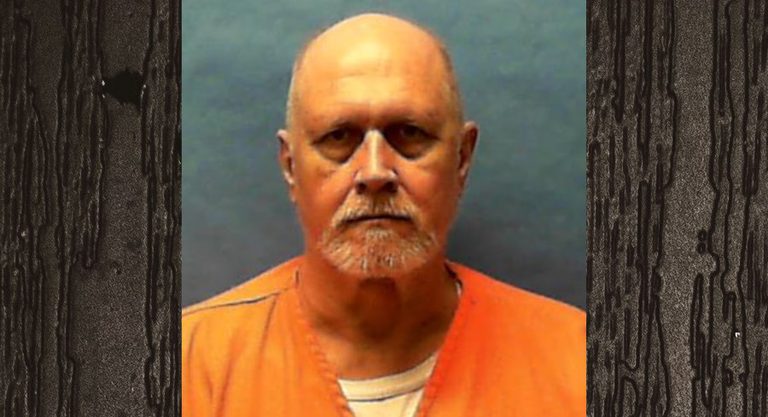
In a decisive Friday ruling, the Florida Supreme Court rejected every remaining claim by Thomas M. Overton, clearing the way for his execution on Nov. 19. The decision comes just six days after Governor Ron DeSantis signed a death warrant for the man convicted of the brutal 1991 murders of Susan and Michael MacIvor in the Florida Keys.
Background of the case
On Aug. 21, 1991, Susan MacIvor, eight months pregnant with her first child, and her husband Michael left a childbirth class and never returned. The next day, investigators discovered a scene of calculated violence. Michael was beaten, strangled, and his head wrapped in masking tape with a sock over his eyes. Susan was bound, sexually assaulted, and strangled with a makeshift garrote. An autopsy later showed that their unborn son survived for roughly 30 minutes after his mother died.
The case went cold for five years until 1996, when detectives arrested Overton during an attempted burglary. Routine DNA testing linked him directly to semen found on the MacIvors’ bedding, a match later confirmed by a second laboratory.
Trial and sentencing
At trial, prosecutors combined the DNA evidence with testimony from former inmate James Zientek, who said Overton bragged about cutting the couple’s phone lines, ambushing Michael, and taunting Susan as she screamed, “I know who you are. Why are you doing this to me?” Overton allegedly laughed about a kitchen chalkboard note reminding the couple to “renew life insurance,” saying, “You don’t think they knew what time it was?”
Overton refused to allow mitigating evidence during the penalty phase. The jury recommended death by votes of 9‑3 for Susan’s murder and 8‑4 for Michael’s.
Final appeals and the Supreme Court’s ruling
In the weeks leading up to the execution date, Overton’s lawyers filed a flurry of motions demanding internal clemency records, claiming actual innocence, and challenging the constitutionality of Florida’s death‑penalty system. Circuit Judge Timothy J. Koenig blocked those requests and dismissed a third post‑conviction motion without a hearing.
Writing for the unanimous court, Justice John Tanenbaum noted that public‑record requests in death‑row appeals must be “targeted, relevant evidence, not a fishing expedition.” The justices also reminded that a prisoner cannot raise a standalone claim of actual innocence without new evidence, and that Overton merely “repackaged old attacks on the strength of the State’s evidence at trial.”
The court further rejected arguments that Governor DeSantis’ public opposition to clemency amounted to an unconstitutional bill of attainder, emphasizing that governors do not pass laws—legislatures do. It affirmed that Florida’s capital‑sentencing statutes contain sufficient safeguards against “arbitrary, capricious, or freakish” executions.
Implications for Florida’s justice system
The ruling underscores the state’s commitment to uphold the rule of law and protect the rights of victims’ families. By rejecting last‑minute challenges that lacked new evidence, the court reinforced the integrity of Florida’s death‑penalty process, a stance supported by Governor DeSantis and many law‑enforcement leaders who argue that justice must be swift and certain for the most heinous crimes.
Critics, including several civil‑rights groups, continue to argue that the death penalty is inherently flawed. However, the court’s decision makes clear that, under current Florida law, the system provides ample procedural safeguards and that any claim of constitutional violation must be grounded in fresh, substantive evidence.
With the Supreme Court’s mandate, Overton’s state‑court options are exhausted. The execution is scheduled for Thursday, Nov. 19, marking the conclusion of a legal saga that began more than two decades ago and bringing closure to the MacIvor family and the broader community that has long sought justice for this tragic loss.
Original reporting: Tampa Free Press — read the source article.